

Let’s find your next opportunity
AI Assistant: {{ chat.assistant.message }}
{{meta?.totalCount}}
results found
Sort By
{{ job.job_posting_title
}}
{{ job.job_posting_title }}
{{ job.is_cms_job ? (job.cities.split(';').length > 1 ? 'Various locations' : job.location_mappings[0]) : (job.location_mappings.length > 1 ? 'Various locations' : job.location_mappings[0]) }}
{{ job.time_type }}

We are sorry there are no jobs that match your exact criteria. Try a new search term, or use the filters to continue browsing for available opportunities.
Suggested roles matches
{{ job.title }}
{{ job.title }}
{{ [job.cities[0], job.regions[0], job.countries[0]].join(', ') }}
Various locations
We are sorry there are no jobs that match your exact criteria. Try a new search term, or use the filters to continue browsing for available opportunities.
Let’s find your next opportunity
{{ job.job_posting_title
}}
{{ job.job_posting_title }}
{{ job.is_cms_job ? (job.cities.split(';').length > 1 ? 'Various locations' : job.location_mappings[0]) : (job.location_mappings.length > 1 ? 'Various locations' : job.location_mappings[0]) }}
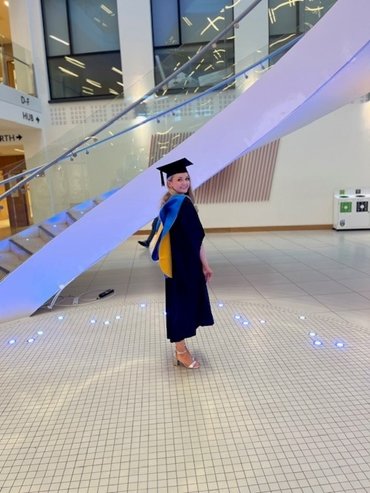
Dia dhuit, is mise Caroline. I'm an Assistant Ecologist with AtkinsRéalis, based in our Cork office and working within the Infrastructure Ireland team.
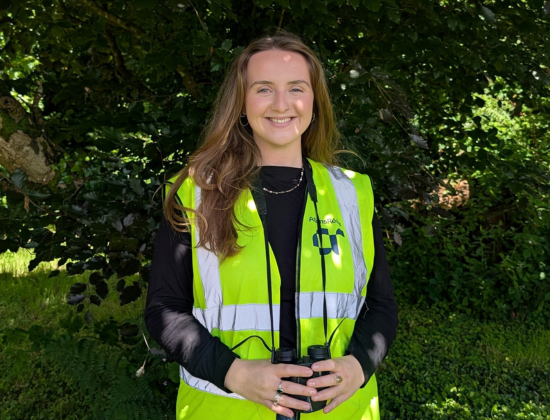
I joined AtkinsRéalis in January 2023 as a Graduate Ecologist, having finished my BSc in Ecology and Environmental Biology at University College Cork the year before. I've always loved nature and the outdoors, and combining my interests in biology and geography felt like a natural path into ecology. It was during my studies that I first came across the idea of a consultant ecologist, and I was immediately drawn to the mix of scientific research and practical application, the idea that ecological knowledge can directly inform decisions and lead to more sustainable development.
What attracted me most was the chance to make a tangible difference. Ireland's biodiversity is under real pressure, with the majority of our EU-protected habitats currently assessed as being in unfavourable condition. That's reinforced for me how important it is to protect and enhance the habitats we still have. Being able to contribute to essential infrastructure while safeguarding biodiversity is something I find genuinely rewarding.
No two days the same
One of the things I enjoy most is that there's rarely such a thing as a typical day. My time is split between the office and the field.
An office day usually starts early, getting stuck into whatever reports I'm working on, Appropriate Assessment Screenings, Natura Impact Statements, Biodiversity Chapters for EIARs, Ecological Impact Assessments, and constraints studies among them. Around that sits the work that makes those reports possible: liaising with subconsultants, assessing survey results and working out what they mean for a development, and working with engineers and planners to shape mitigation measures and design changes, sometimes as simple, and as important, as advising on how to let wildlife move safely through a site. Consultation with bodies like the National Parks and Wildlife Service, Inland Fisheries Ireland and local authorities is a big part of it too, as is finding solutions the client is happy with and that I, as an ecologist, can stand over.
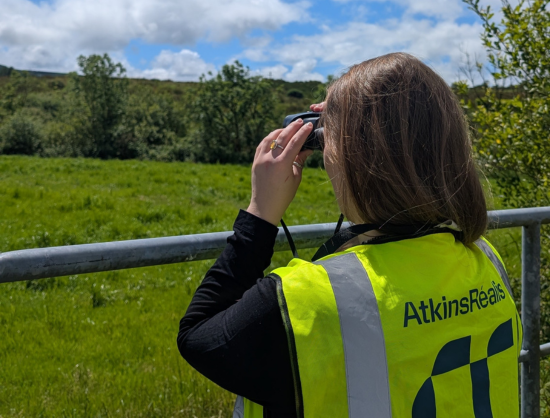
Then there are the field days. These can involve preliminary ecological assessments of proposed development areas: building a detailed site photolog, mapping habitats using QField and QGIS, recording invasive species, and assessing whether habitats could support bats, mammals, amphibians, reptiles or birds. Depending on the site, more targeted surveys might follow, often under licence from the NPWS, anything from trail-camera mammal surveys to freshwater pearl mussel surveys using bathyscopes, breeding bird surveys, otter and badger surveys. Some days it's simply checking a bridge for its potential as a bat roost before we bring in a specialist.
Where development and nature meet
One of the most rewarding parts of this work is knowing it has real benefits for both people and the environment. My role is to help deliver infrastructure in a way that minimises impacts on wildlife and habitats, while spotting opportunities to enhance biodiversity. By getting involved early in the design process, we can avoid or reduce impacts before they happen and find solutions that work for nature and communities alike.
Recently I've worked on Greenway and Blueway projects here in Ireland, which will provide recreational and active-travel routes while supporting people's physical and mental wellbeing by connecting them with nature. So far I've been lucky to work across a real variety of projects, roads, bridges, large-scale residential developments, water infrastructure upgrades and habitat mapping, for clients including Transport Infrastructure Ireland, Uisce Éireann and local authorities.
Growing into the role
Since joining in 2023, my career has grown a lot. Starting out, I was learning from and supporting more experienced ecologists; now I lead ecological inputs on a range of projects myself, preparing technical reports with minimal supervision and working closely with planners, engineers and other specialists. I've become far more confident managing my own workload, making decisions and communicating with different stakeholders and clients.
I've also come to appreciate just how central ecology is to planning, and how much emphasis there now is on protecting and enhancing what we have. One of the most valuable things I've learned is that development and environmental protection don't have to be at odds. Rather than a constraint, ecology can help inform better outcomes for both people and nature. We're part of the natural environment ourselves, and designing spaces that support healthy communities goes hand in hand with protecting biodiversity.
What's exciting about what's next
In England, Biodiversity Net Gain is now a mandatory requirement for most developments needing planning permission. Ireland doesn't have that legislation yet, but things seem to be heading that way, driven by the requirements from the EU to develop and adopt Nature Restoration Plans, the emphasis on BNG in the latest National Biodiversity Action Plan, and local authorities beginning to build BNG principles into planning policy. That's exciting, because it's a shift from simply minimising harm to actively improving biodiversity, leaving habitats in a better condition than we found them. From an ecologist's point of view, it opens the door to more innovative, research-backed solutions in design.
Why I stay
I chose AtkinsRéalis because of the breadth and variety of the projects, and the chance to work alongside multidisciplinary teams on schemes that balance development with environmental protection. The focus on technical excellence, innovation and sustainability aligned closely with my own goals. I stay because no two projects are the same, there's always something to learn, and I've been able to grow from supporting projects as a graduate to leading ecological inputs, working with talented colleagues across disciplines the whole way.
Ireland's biodiversity needs people who care about protecting it. If that sounds like you, come and see what our Environment team is working on.
Related blogs
A graduate ecologist's thoughts on sustainable development
Caroline shares how her role as a graduate ecologist is shaping sustainable development by putting nature at the heart of every project.
A first for Ireland: building carbon reduction into the tender
How a career with AtkinsRéalis Ireland means building carbon reduction in from the beginning.
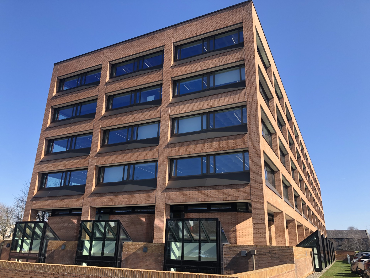
From C3 to A2: a deep retrofit in Dublin 4
How AtkinsRéalis’ structural engineering capability in Ireland drives sustainable and visible value – what could you add?

How AtkinsRéalis UK&I supports employee wellbeing?
A quick look towards a healthier, happier workplace. Find out how we help you to thrive.
Why Water? Inside the team engineering the future of the UK’s water infrastructure
Don't just imagine it - read about it. Meet the engineers and scientists behind the headlines, working on the innovations and driving the improvements.
Starting over: how I saved my civil engineering apprenticeship
Setbacks don't define you – how you respond does. See how I turned my first one into a win.
My future in civil engineering: why an apprenticeship was the right choice
Here's how my apprenticeship is helping me grow in confidence and real-world skills.
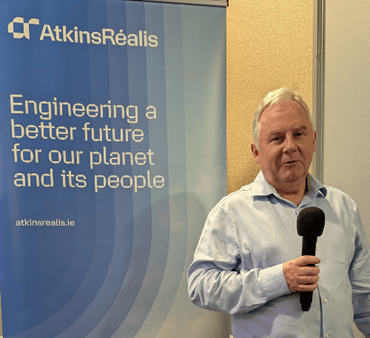
Why Ireland Is the Place to Build Your Engineering Career
Are you ready? How leaders can break past the ceiling, take on bigger roles, and deliver Ireland's most ambitious programmes.
Engineering jobs in Ireland: Build your legacy on major projects
Join AtkinsRéalis Ireland to work on Metrolink, Dublin Airport, Water Supply Project and more. Explore engineering jobs, leadership opportunities, and career growth.
From South Africa to Ireland: Curtis’s career leap with AtkinsRéalis
Discover how Curtis embraced relocation, overcame challenges, and unlocked new career opportunities with AtkinsRéalis.
What it's like to be a Civil Engineering Degree Apprentice at AtkinsRéalis Ireland
How my apprenticeship at AtkinsRéalis Ireland helped me grow via hands-on experience and real-world engineering projects.
Graduate careers in environmental consultancy at AtkinsRéalis Dublin
Explore graduate environmental consultancy at AtkinsRéalis Dublin: fieldwork, projects, and career growth in sustainability.
Related jobs

Everyone belongs
We empower each individual to shine and contribute to our collective impact. We believe in the power of unique perspectives. It’s how we’re engineering a better future every single day.