

Let’s find your next opportunity
AI Assistant: {{ chat.assistant.message }}
Suggested roles matches
Sort By
{{ job.job_posting_title
}}
{{ job.job_posting_title }}
{{ job.is_cms_job ? (job.cities.split(';').length > 1 ? 'Various locations' : job.location_mappings[0]) : (job.location_mappings.length > 1 ? 'Various locations' : job.location_mappings[0]) }}

We are sorry there are no jobs that match your exact criteria. Try a new search term, or use the filters to continue browsing for available opportunities.
Suggested roles matches
{{ job.title }}
{{ job.title }}
{{ [job.cities[0], job.regions[0], job.countries[0]].join(', ') }}
Various locations
We are sorry there are no jobs that match your exact criteria. Try a new search term, or use the filters to continue browsing for available opportunities.
Let’s find your next opportunity
{{ job.job_posting_title
}}
{{ job.job_posting_title }}
{{ job.is_cms_job ? (job.cities.split(';').length > 1 ? 'Various locations' : job.location_mappings[0]) : (job.location_mappings.length > 1 ? 'Various locations' : job.location_mappings[0]) }}
When Zahra Farai walks into the office each morning, she sees more than just desks and meeting rooms. As a Talent Acquisition Partner, she recognises that every physical space has the power to either welcome employees or create barriers that prevent them from bringing their whole selves to work.
Physical accessibility isn't just about ramps and lifts - it's about creating environments where every person can thrive, recharge, and contribute their best work without hesitation or judgement.

Meet Zahra Farai: Connecting people with opportunities
Zahra joined AtkinsRéalis less than a year ago with a clear mission. "As a Talent Acquisition Partner, my focus is on finding and attracting outstanding people and ensuring candidates are matched to roles where they can thrive," she explains. "I joined the company ten months ago and I love building those connections."
Her role goes beyond traditional recruitment. She understands that attracting exceptional talent means creating workspaces where that talent can flourish—and that starts with physical accessibility.
Defining true inclusivity through accessible spaces
For Zahra, accessibility represents something deeper than compliance with regulations. She describes it as "true inclusivity, knowing I can use it without hesitation or judgement, whether I'm taking a quick nap to recharge, or finding a quiet place to pray; the environment feeling welcoming and being supported to use in the way I need."
This perspective transforms how we think about workplace design. When employees feel supported to use shared spaces authentically, whether for rest, faith, or personal needs - something remarkable happens.
"When I feel supported to use shared spaces, whether rest or faith; it allows me to bring my whole self to work, the sense of belonging directly impacts my well-being and ability to contribute creatively to the team," Zahra notes.
This connection between physical space and creative contribution isn't coincidental. When people don't have to mask parts of themselves or worry about accessing basic needs, their mental energy can focus on innovation and collaboration.
Practical strategies for inclusive workspace design
Creating physically accessible workspaces requires intentional action across multiple areas. Zahra shares specific strategies that make immediate impact:
Embrace flexible communication styles
"Flexible communication and diverse work styles – offer beyond one size fits all," Zahra recommends. "Give information in multiple formats, visuals, written, verbal, allow extra time in meetings and also be clear about expectations."
This approach acknowledges that people process information differently and creates multiple pathways for engagement.
Design for sensory comfort
Sensory considerations play a crucial role in accessibility. "Minimising sensory overload – avoid flashy animations, auto playing media with sound on, or pop ups, where this is necessary users should have the option to disable or pause," she advises.
The physical design elements matter equally: "Design – sensory friendly rooms; light and sound adjustable to help with sensory sensitivity."
Prioritise clear, consistent layouts
Whether digital or physical, design consistency helps everyone navigate spaces more effectively. Zahra emphasises "using clean layouts and clear navigation, consistent button placements so users can adjust quickly."
Normalise flexibility in work arrangements
One of the most powerful shifts involves changing workplace culture around flexibility. "Normalise flexibility – discuss flexible schedules, remote options or different ways of working so colleagues don't feel singled out when they request accommodations," Zahra suggests.
When flexibility becomes standard practice rather than special accommodation, it removes stigma and creates psychological safety.
Foster education and genuine listening
Building truly inclusive spaces requires ongoing learning. "Educate and listen – understand their point of view when disclosing a request or condition, listen without rapidly offering quick fixes, whilst educating yourself or the team on disability awareness resources and trainings," Zahra explains.
She adds: "Learn about mental health conditions which helps in reducing stigma and builds empathy."
Leverage assistive technology
Technology can bridge accessibility gaps effectively. Zahra highlights "accessibility tools like voice control reading or typing, or note taking on calls" as practical solutions that support various needs.
Building workspaces where everyone thrives
Physical accessibility in workspaces isn't about perfection, it's about progress and intentionality. When organisations prioritise accessible design, they create environments where all employees can contribute their unique perspectives and talents.
The ripple effects extend beyond individual well-being. Teams become more creative, collaboration improves, and companies attract exceptional talent who value inclusive environments.
Start small but start today. Whether it's adjusting lighting options, creating quiet spaces, or simply normalising conversations about workplace flexibility, every step towards physical accessibility creates a more inclusive workplace for everyone.
As Zahra's experience demonstrates, when we design spaces that truly welcome all employees, we unlock the full potential of our teams - and that benefits everyone.
Discover our opportunities and be a part of our culture where everyone belongs.
Related blogs

How AtkinsRéalis UK&I supports employee wellbeing?
A quick look towards a healthier, happier workplace. Find out how we help you to thrive.
“Recognition, reflection, and responsibility”: Nidhie on leading UK infrastructure frameworks from India, mentoring with purpose, and what IWD really means
From Gurgaon to the UK, read how Nidhie drives complex infrastructure delivery with clarity, calm, and conviction.
“Small improvements at design stage can make a big difference”: Pooja on water infrastructure, working across borders, and never giving up on yourself
From designing critical systems to strengthening global teamwork, read how Pooja creates meaningful impact behind the scenes.
“I discovered a deep love for art”: Sangeeta on nuclear engineering, fusion technology, and finding creativity where you least expect it
Meet Sangeeta, an engineer who discovered a surprising love for art. Read how she blends creativity with her work on global projects.
Mayowa: Aligning budget, planning, and strategy to deliver excellence
Meet Mayowa, Project Manager at AtkinsRéalis.
At the heart of environmental assessments: Nancy’s essential role
Meet Nancy, Senior Environmental Planner and Project Manager at AtkinsRéalis.

At the heart of nuclear safety: Yang’s civil engineering expertise
Discover Yang, a senior nuclear civil engineer at Candu Energy Inc., an AtkinsRéalis company.
Coralie, at the crossroads of strategic communication and the field
Meet Coralie, Senior Manager, Communications, Projects and Assets at AtkinsRéalis.
Souvik: A nuclear leader and mentor dedicated to shaping a sustainable energy future
Discover Souvik, Nuclear Director of Reactor Engineering within the Engineering Excellence division.
Claudia: building dams that power our communities
Discover Claudia, a structural engineer specializing in dams at AtkinsRéalis.
Amin: Shaping the future of infrastructure and water resources in Canada
Meet Amin, Team Lead for Municipal Infrastructure and Head of the Water Resources Group at AtkinsRéalis.
Shraddha: A recent graduate at the heart of a rapidly transforming nuclear industry
Discover Shraddha, a process engineering assistant at Candu Energy Inc., an AtkinsRéalis company, who is building her career in the midst of the nuclear renaissance.
Related jobs
We are sorry there are no jobs that match your exact criteria. Try a new search term, or use the filters to continue browsing for available opportunities.
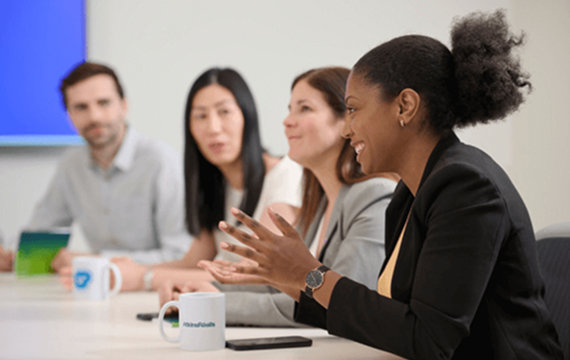
Everyone belongs
We empower each individual to shine and contribute to our collective impact. We believe in the power of unique perspectives. It’s how we’re engineering a better future every single day.