

Let’s find your next opportunity
AI Assistant: {{ chat.assistant.message }}
{{meta?.totalCount}}
results found
Sort By
{{ job.job_posting_title
}}
{{ job.job_posting_title }}
{{ job.is_cms_job ? (job.cities.split(';').length > 1 ? 'Various locations' : job.location_mappings[0]) : (job.location_mappings.length > 1 ? 'Various locations' : job.location_mappings[0]) }}
{{ job.time_type }}

We are sorry there are no jobs that match your exact criteria. Try a new search term, or use the filters to continue browsing for available opportunities.
Suggested roles matches
{{ job.title }}
{{ job.title }}
{{ [job.cities[0], job.regions[0], job.countries[0]].join(', ') }}
Various locations
We are sorry there are no jobs that match your exact criteria. Try a new search term, or use the filters to continue browsing for available opportunities.
Let’s find your next opportunity
{{ job.job_posting_title
}}
{{ job.job_posting_title }}
{{ job.is_cms_job ? (job.cities.split(';').length > 1 ? 'Various locations' : job.location_mappings[0]) : (job.location_mappings.length > 1 ? 'Various locations' : job.location_mappings[0]) }}
Charity, you 'made it brilliant' by creating an initiative to make sanitary disposal facilities available and useable for female workers on construction sites. Please tell us how this idea came about?
When working on site full-time, I realised the provision of sanitary disposal facilities on construction sites was inconsistent. I raised the issue with a Contractor's Health & Safety team and was advised that the provision of sanitary disposal facilities was 'only guidance' and not a legal requirement.
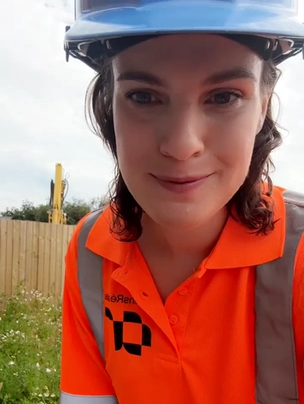
I asked some of the other women on site if they would support my complaint as they were going to extraordinary lengths to manage their dignity during menstruation. Unfortunately, they did not feel as though they were in a position to complain so I raised the issue with the AtkinsRéalis Project Manager who insisted change was made.
I shared my experience with peers at a networking event and was saddened to realise my experience was not unique and something women had learned to live with. That's why I started my campaign.
How did you get started, what were your first steps?
I created a petition on the government website which I circulated on my personal social media accounts. I then took a number of steps to increase awareness of the campaign which included:
- Writing to my MP
- Writing a template letter for supporters to send to their MP
- Writing directly to the Health and Safety Executive (HSE) and Government Ministers
- Writing articles for popular magazines such as Ground Engineering Magazine
- Talking openly about the issue online
- Connecting with networks such as 'Bold as Brass' who make positive change within the industry.
Did you face any challenges whilst bringing it to life? Was it difficult to make the changes?
In the UK, a petition needs 100,000 signatures to be debated in Parliament. I knew that obtaining such a large number of signatures was unlikely, so I took a personal approach by reaching out to Government Ministers and the HSE directly.
What is the current status?
The campaign was successful! HSE published a document called 'Construction – Welfare Standards' which provides a framework for interpreting the general welfare requirements under the Construction Design and Management Regulations. The document is used by HSE during site inspections and states in black and white that there must be 'suitable means for the disposal of sanitary dressings in toilets used by women', and 'sufficient space to ensure the sanitary waste disposal units does not touch the seat of the closet'.
What are the next stages for the project, what are your hopes for it for the future? (and how are AtkinsRéalis supporting at this point?
Implementing change will take time. The next part of the process is to raise awareness of recent changes and the importance of consistent welfare across construction sites.
AtkinsRéalis are currently trialling period packs which are given to employees when they attend site. The packs contain items such as tampons, pads, antibacterial gel and sanitary disposal packets. The aim of the packs it to provide support to colleagues and aid disposal of sanitary waste if no bin is available.
AtkinsRéalis have also updated risk assessments and working method statements to include the provision of sanitary disposal facilities.
Why was it important to create this project?
The clarification of the law makes it easier for employers to understand what facilities are required and helps empower women to challenge their employers if appropriate facilities are unavailable.
The UK has the lowest percentage of women in engineering in Europe. I think it is important that everyone feels welcome in their place of work and hopefully this change will contribute to more women staying in the engineering and construction sector.
Meet more of our brilliant women making an impact on lives across the world.
Related blogs
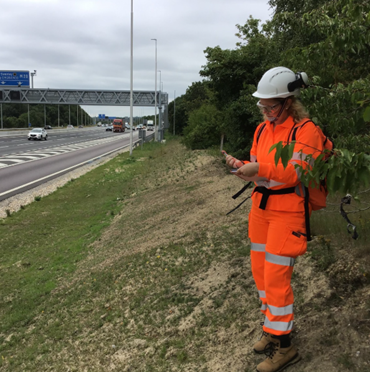
Making work, parenting and career progression work together
From career progression to caring responsibilities, Maria’s journey highlights the power of trust, empathy, and an inclusive workplace culture.
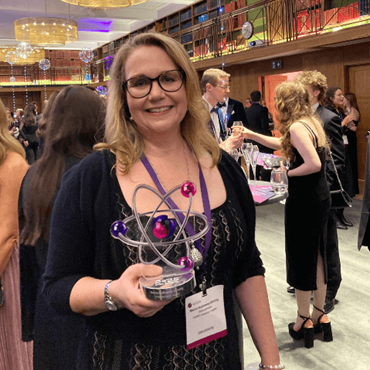
Return to work in STEM careers
Maria shares her career break, return to work and experiences with us in ground engineering.
Related jobs
Everyone belongs
We empower each individual to shine and contribute to our collective impact. We believe in the power of unique perspectives. It’s how we’re engineering a better future every single day.