

Let’s find your next opportunity
AI Assistant: {{ chat.assistant.message }}
{{meta?.totalCount}}
results found
Sort By
{{ job.job_posting_title
}}
{{ job.job_posting_title }}
{{ job.is_cms_job ? (job.cities.split(';').length > 1 ? 'Various locations' : job.location_mappings[0]) : (job.location_mappings.length > 1 ? 'Various locations' : job.location_mappings[0]) }}
{{ job.time_type }}

We are sorry there are no jobs that match your exact criteria. Try a new search term, or use the filters to continue browsing for available opportunities.
Suggested roles matches
{{ job.title }}
{{ job.title }}
{{ [job.cities[0], job.regions[0], job.countries[0]].join(', ') }}
Various locations
We are sorry there are no jobs that match your exact criteria. Try a new search term, or use the filters to continue browsing for available opportunities.
Let’s find your next opportunity
{{ job.job_posting_title
}}
{{ job.job_posting_title }}
{{ job.is_cms_job ? (job.cities.split(';').length > 1 ? 'Various locations' : job.location_mappings[0]) : (job.location_mappings.length > 1 ? 'Various locations' : job.location_mappings[0]) }}
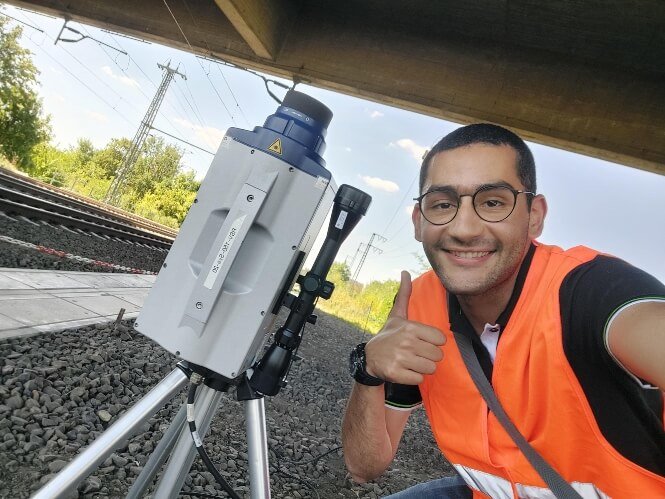
At AtkinsRéalis, our civil engineers are driven by creativity, precision, and purpose. Yet, outside the professional sphere, several misconceptions persist about what civil engineers actually do. So, we sat down with Islam, a Graduate Civil Engineer at AtkinsRéalis, to unpack some of the most common myths and reveal what civil engineering truly looks like today.
Civil engineers just build—Architects do all the Designing
This is a very common myth. But civil engineering is not a construction
worker, but they have various engineering roles through the whole life cycles
of the project. In addition to that architects and civil engineers are both
involved in the design and drafting stages, while civil engineers make the
structural design of the structures to create the bones that will sustain all
the architectural elements and ensure that occupants can access it safely.
Civil engineering is all about concrete and hard hats
Civil engineering extends far beyond working with concrete. It is a thoughtful, technical, and managerial discipline, where civil engineers often serve as project managers—overseeing projects from inception to completion. They ensure that each phase is executed on time, within budget, and according to the required specifications. The field is rapidly evolving with the integration of advanced technologies. Geographic Information Systems (GIS) enables engineers to incorporate geospatial data and perform sophisticated analyses to support informed decision-making. Similarly, Building Information Modeling (BIM) has become a cornerstone in modern project development, facilitating collaboration and precision across disciplines. Furthermore, civil engineers are now leveraging digital twin technology, using high-resolution laser scanners to create accurate virtual replicas of physical structures, enhancing monitoring, maintenance, and predictive analysis.
Civil engineering is monotonous and lacks career diversity
Civil Engineering isn't dull at all and has a variety of career paths. As a civil engineer you are always facing different challenges and problems at every project which requires you to solve them in an innovative way, which is the core task of you as an engineer to be a problem solver, and only this provides a very interesting and stimulating environment for civil engineers. Civil engineers contribute to the design and development of critical infrastructure such as dams, airports, iconic buildings, bridges, tunnels, power plants, and water treatment facilities. They may specialize as structural design engineers for buildings, bridges, dams, or tunnels; or pursue roles in geotechnical engineering, transportation and traffic engineering, surveying, construction management, or project management. The breadth of opportunities makes civil engineering a versatile and rewarding profession.
Architects are more important than Civil Engineers
No role is more important than the other. Each of us contributes a unique and invaluable part to the built environment. We rely on a talented architect to shape the urban style of our cities and to design buildings that are functional, comfortable, and harmoniously integrated with their natural surroundings—because the art of architecture is deeply rooted in the nature of the place. At the same time, civil engineers are essential in bringing these visions to life by creating the structural design that gives life and soul to the architectural concepts. In addition, they manage the construction process, oversee the project itself, and perform structural health monitoring and maintenance of the building throughout its lifetime.
Civil Engineers don't have a role in the future—It's all about tech now
Civil engineers are not passive observers of technological change—they are active participants, constantly learning and seeking ways to improve and enhance their work through innovation and digital transformation. As long as humanity exists, the need to build and sustain civilization will remain—and with it, the enduring need for civil engineers.
If you're passionate about design, technology, and making a meaningful impact, explore opportunities with us.
Related blogs

Behind the scenes of project delivery: Mohamed’s journey at AtkinsRéalis
From paper files to digital systems, Mohamed’s career is a story of adapting to change while keeping projects moving.

How Belal Deiranieh is shaping Middle East transportation.
Transportation is at the heart of the Middle East’s transformation. Discover how Belal Deiranieh will help drive the next phase of growth and connectivity at AtkinsRéalis.

From a LinkedIn message to leading talent strategy across regions: Meet Doaa
Discover Doaa’s journey from design to strategic talent leadership. Read how she fast tracked her growth and built strong hiring practices across regions.

“Visibility changes perception”: Milena on leadership, confidence, and her journey from London to Dubai
Discover Milena’s path to becoming one of CIBSE’s youngest Fellows, read how visibility and representation shaped her leadership philosophy.

Building theme parks for everyone: Bahar’s vision for accessibility
Discover how AtkinsRéalis designs accessible theme parks at Six Flags Qiddiya.

Creating inclusive workspaces through physical accessibility
Learn practical strategies for building physically accessible workspaces that help all employees thrive, from sensory-friendly design to flexible communication.

How to become a structural engineer in the UAE
If you’re wondering how to become a structural engineer in the UAE, look no further. From skills and regional benefits to progression opportunities, here’s how to take the next step in your career.

Life as a Planning Engineer at AtkinsRéalis: Samira's Journey
Discover Samira’s inspiring career as a Planning Engineer at AtkinsRéalis. Learn about the company's culture and opportunities for growth.

What is the New Murabba project in Saudi Arabia?
Learn about the innovative New Murabba project in Saudi Arabia.
Exploring engineering jobs in the UAE with AtkinsRéalis
Across a range of engineering disciplines, AtkinsRéalis offers diverse opportunities in the UAE.
What to expect when you join the AtkinsRéalis graduate program in the UAE and Saudi Arabia
If you’re exploring graduate engineering jobs in the UAE and beyond, this grad scheme could be exactly what you’re looking for. Here’s what you can expect when you join this program.

Journey of a talent acquisition maverick, Reena Sequeira
Learn more about Reena Sequira, Senior Talent Acquisition Partner at AtkinsRéalis.
Related jobs

Talent Community
Would you like to know more? Not ready to apply? Join our talent community to stay connected and engaged with us at AtkinsRéalis.