

Let’s find your next opportunity
AI Assistant: {{ chat.assistant.message }}
{{meta?.totalCount}}
results found
Sort By
{{ job.job_posting_title
}}
{{ job.job_posting_title }}
{{ job.is_cms_job ? (job.cities.split(';').length > 1 ? 'Various locations' : job.location_mappings[0]) : (job.location_mappings.length > 1 ? 'Various locations' : job.location_mappings[0]) }}
{{ job.time_type }}

We are sorry there are no jobs that match your exact criteria. Try a new search term, or use the filters to continue browsing for available opportunities.
Suggested roles matches
{{ job.title }}
{{ job.title }}
{{ [job.cities[0], job.regions[0], job.countries[0]].join(', ') }}
Various locations
We are sorry there are no jobs that match your exact criteria. Try a new search term, or use the filters to continue browsing for available opportunities.
Let’s find your next opportunity
{{ job.job_posting_title
}}
{{ job.job_posting_title }}
{{ job.is_cms_job ? (job.cities.split(';').length > 1 ? 'Various locations' : job.location_mappings[0]) : (job.location_mappings.length > 1 ? 'Various locations' : job.location_mappings[0]) }}
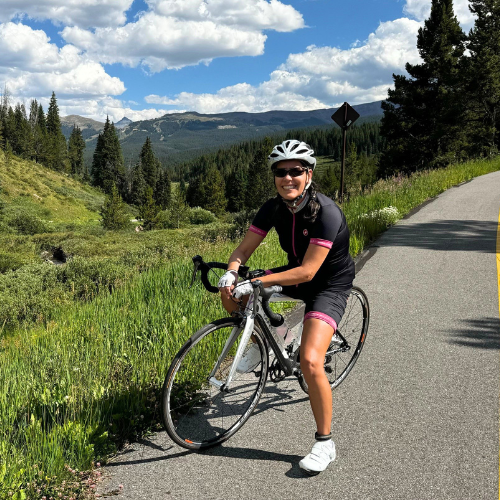
Kristi, Sustainability Manager for North America and Architecture Project Manager, on growing up in a solar pioneer’s house, the project she’s most proud of, and what LEED v5 is going to demand of all of us.
Kristi’s understanding of sustainable design started before she had a name for it.
I grew up in an environmentally progressive house designed by my father who was a solar pioneer,
she says. The desert Southwest, with its long sightlines and unforgiving sun, was her first teacher. Conservation of resources wasn’t an idea she encountered later. It was the default.
Thirty years on, Kristi works out of Denver, Colorado, as part of the Buildings & Places technical group at AtkinsRéalis. She holds two roles. As an architecture project manager, she leads new construction and renovation projects across the US and Canada. As Sustainability Manager for North America, she provides technical guidance on every building project in the region with a sustainability component, mentors staff working toward accreditation, and liaises with platforms including the US Green Building Council and Austin Energy Green Building.
The dual role isn’t accidental. It reflects how Kristi thinks the work should be done.
Sustainability should be the driving force behind every project, influencing every decision the design team makes,
she says. There is a disconnect between the academic dogma and professional practice that enables a chasm to develop. By providing technical expertise at the project level and demonstrating to our clients that we take sustainability seriously, we can help bring the conversation to the forefront.
A project that proves the point
Ask Kristi for an example of what that looks like in practice, and she’ll point to the Colorado National Guard 100th Missile Defense Brigade Readiness Center in Colorado Springs.
The project is new construction on a previously developed site, a deliberate choice that reduces pressure on undeveloped land. The building has been oriented to capture natural light and frame views of the surrounding sky, water and vegetation, on the basis that proximity to nature improves the wellbeing of the people inside. Landscaping uses only native and adaptive plants, cutting potable water consumption.
The most distinctive feature is the geothermal heating and cooling system, which will reduce both operational costs and the global warming potential of the supporting HVAC over the building’s lifetime. Construction is nearing completion, and the project is on target to receive LEED Silver certification under v4/v4.1.
It’s the kind of project that doesn’t make headlines but quietly reshapes what a building can be for the people using it, and for the climate around it.
What LEED v5 is going to ask of us
Looking ahead, Kristi is energized by the imminent rollout of LEED v5, the next major version of the certification system that has shaped sustainable building for over two decades.
Version 5 is more robust and stringent, more tightly integrated with the building code, and takes greater consideration of the role of the user and occupant,
she says. It focuses on a low‑carbon future through decarbonisation, quality of life and ecological conservation.
The shift will require design teams to collaborate at a deeper level than ever before. It will demand a responsive, data‑driven design approach to prove the design is as progressive as possible. This is an exciting and challenging transition.
For Kristi, this is the future of the profession and the reason she’s actively looking to grow her team.
Beyond the walls of the office
What’s clear talking to Kristi is that sustainability isn’t a brief she picks up at her desk and puts down at the end of the day. Native and adaptive plants in her garden. Alternative transport over the car. Windows open before the air conditioning goes on. The principles she applies to a federal building in Colorado Springs are the same ones she applies at home.
Sustainability and green design go beyond the walls of the office. It is a shift to daily life and practice.
Working with Kristi
After ten years at AtkinsRéalis, Kristi has progressed from architectural staff to design manager, project manager and Sustainability Manager. She’s emphatic about wanting more people on her team, particularly those serious about sustainability accreditation.
Please do,
she says, when asked what she’d tell someone thinking about joining. I am always looking for people interested in sustainability. The Buildings & Places group is a US GBC Gold member; we have a lot of resources for staff to take advantage of. Most importantly, I am looking for people that are serious about sustainability and want to utilise their accreditation.
If that’s you, get in touch.
Explore exciting architecture and sustainability opportunities in North America or join our talent community today.
Related blogs
You don't have to be an engineer to build a career in water
Meet Grace and read how she is helping shape safer, stronger communities through water projects.
I came back after nearly two decades. It felt like coming home
Meet Necolle and read how she's helping communities become more resilient to flooding.
I'm a Planner, and I do a lot less planning than you'd think
Read how Armani, a Planner at AtkinsRéalis, expanded his role beyond floodplain management and found new ways to make a difference.
From intern to design engineer: Kayla on building a water career in Texas
Meet Kayla, an Engineer helping deliver the clean water infrastructure communities rely on every day.
Making the map where there wasn't one
Meet Zane, a Water Resources Engineer helping communities better understand and prepare for flood risk.
Nicole on public service, safety, and building transportation that lasts
Meet Nicole and read how she's driving safer, more resilient transportation networks.
From engineer to project leader: Serafina on aviation, mentorship, and growth in Florida
Meet Serafina from our Tampa office, where she's helping airports grow and communities thrive.
Mike on mega projects, reinvention, and aviation at Denver International
From mega projects to airport expansion, read how AtkinsRéalis helped Mike grow beyond project delivery.
From intern to project manager: Felix on nine years of building an aviation career
Meet Felix, a Project Manager helping shape the future of aviation through digital innovation and major airport projects across Texas.
Chen Zhou on building better transit systems
Connecting people, operations, and infrastructure is what make transit work.
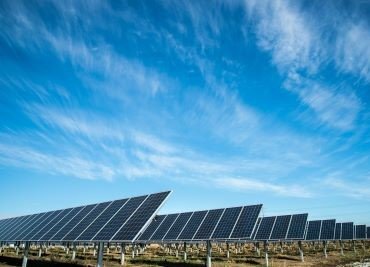
Building the factory behind the energy transition
The US is rapidly scaling clean‑energy manufacturing, and AtkinsRéalis is helping build the digital systems that keep major industrial programs moving with control.
The grid is changing, and so is the work behind it
As the grid evolves, the engineering behind it is changing too. Discover the work guiding major utility projects across the Northeast.
Related jobs
Everyone belongs
We empower each individual to shine and contribute to our collective impact. We believe in the power of unique perspectives. It’s how we’re engineering a better future every single day.