

Let’s find your next opportunity
AI Assistant: {{ chat.assistant.message }}
{{meta?.totalCount}}
results found
Sort By
{{ job.job_posting_title
}}
{{ job.job_posting_title }}
{{ job.is_cms_job ? (job.cities.split(';').length > 1 ? 'Various locations' : job.location_mappings[0]) : (job.location_mappings.length > 1 ? 'Various locations' : job.location_mappings[0]) }}
{{ job.time_type }}

We are sorry there are no jobs that match your exact criteria. Try a new search term, or use the filters to continue browsing for available opportunities.
Suggested roles matches
{{ job.title }}
{{ job.title }}
{{ [job.cities[0], job.regions[0], job.countries[0]].join(', ') }}
Various locations
We are sorry there are no jobs that match your exact criteria. Try a new search term, or use the filters to continue browsing for available opportunities.
Let’s find your next opportunity
{{ job.job_posting_title
}}
{{ job.job_posting_title }}
{{ job.is_cms_job ? (job.cities.split(';').length > 1 ? 'Various locations' : job.location_mappings[0]) : (job.location_mappings.length > 1 ? 'Various locations' : job.location_mappings[0]) }}
On most road schemes, the decisions that shape a project’s carbon footprint are made by the contractor and their supply chain. On an 11.5km resurfacing scheme on the M7 in Co. Kildare, AtkinsRéalis helped make them at the tender stage instead.
The AtkinsRéalis Dublin roads team assisted Transport Infrastructure Ireland (TII) in piloting the CO2 Performance Ladder - a Dutch procurement tool, used for years in the Netherlands, that rewards bidders for committing to lower carbon. The M7 Kildare Bypass scheme was the first time it had been used in Ireland.
What AtkinsRéalis did
The idea is simple but unusual: make carbon reduction something a contractor competes on, rather than something asked of them later. AtkinsRéalis drafted the contract so that the level of carbon reduction a tenderer committed to earned them a notional discount in the tender assessment - the more ambitious the commitment, the stronger their award advantage. To keep it honest, the chosen level was written into the contract, backed by independent certification and a financial penalty for falling short.
Working alongside TII and the Dutch certifying body SKAO, the team ran a workshop to introduce the approach to bidders, evaluated the tenders, assessed the feasibility of the winning contractor’s proposed measures, and carried out site supervision through construction. All five bidders chose to pursue certification - a sign the incentive worked from the outset.
What it delivered
The successful contractor, Jons Civil Engineering, committed to level four of the Ladder’s five levels and backed it with real measures: reusing the old road surface as Reclaimed Asphalt Pavement (a first on an Irish motorway), switching plant and vehicles from diesel to Hydrotreated Vegetable Oil, bringing an electric mini-digger on site, and changing day-to-day habits like cutting engine idling.
The results, independently certified, were striking: a 21% overall cut in carbon, an 84.5% reduction in Scope 1 and 2 emissions and 20.3% in Scope 3 emissions - 311 tonnes of CO2e saved on a single resurfacing scheme.
Why it matters
The M7 pilot has since won an Engineering Excellence Sustainability Award and was named Environmental Engineering Project of the Year and Best Green Public Procurement Project of the Year for 2025. More importantly, it changed how TII buys: the Ladder is now built into all of its pavement renewal framework tenders, so the approach proven on one scheme is shaping many more.
For anyone considering environmental or infrastructure work with AtkinsRéalis in Ireland, this is the kind of project on offer - where commercial, technical and sustainability thinking meet, and doing something for the first time in the country is part of the job.
Related blogs
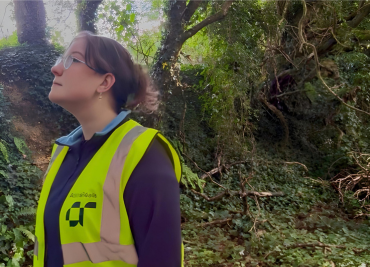
From a grandmother's garden to Ireland's fields: Katie's story
Meet Katie, and read how her love of plants led to a career surveying habitats, butterflies and wildlife across Ireland.
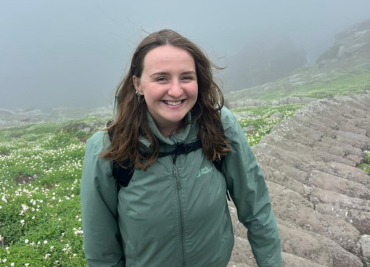
Protecting Ireland's biodiversity, one project at a time: Caroline's story
Meet Caroline, and read how she's grown from graduate to project lead while protecting biodiversity across Ireland.
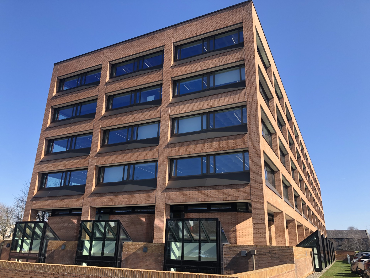
From C3 to A2: a deep retrofit in Dublin 4
How AtkinsRéalis’ structural engineering capability in Ireland drives sustainable and visible value – what could you add?
Why Ireland Is the Place to Build Your Engineering Career
Are you ready? How leaders can break past the ceiling, take on bigger roles, and deliver Ireland's most ambitious programmes.
Engineering jobs in Ireland: Build your legacy on major projects
Join AtkinsRéalis Ireland to work on Metrolink, Dublin Airport, Water Supply Project and more. Explore engineering jobs, leadership opportunities, and career growth.
From South Africa to Ireland: Curtis’s career leap with AtkinsRéalis
Discover how Curtis embraced relocation, overcame challenges, and unlocked new career opportunities with AtkinsRéalis.
Structural engineering in action: Collaboration at the core of AtkinsRéalis Ireland
At AtkinsRéalis, collaboration is more than just a value; it’s how we work, grow, and innovate.
How I built a leadership career in infrastructure engineering
I've built a career I love in infrastructure – here's how you can shape your own path too.

Engineering better sustainable places for all
From large-scale strategic city planning and urban regeneration to town centres, schools, greenspaces, active travel and infrastructure design, our Landscape and Urban Design team create the places that matter.
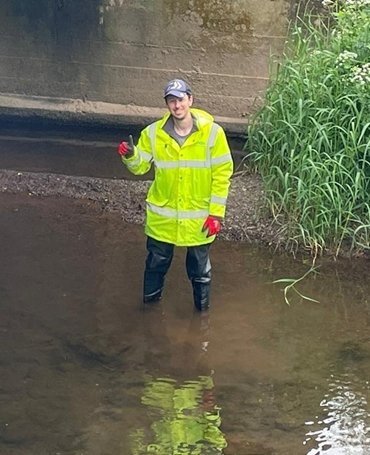
What makes working at AtkinsRéalis Ireland so rewarding?
How AtkinsRéalis in Ireland drives innovation and strong team culture.

Making the world your office with international remote working
How AtkinsRéalis is making work better for you, from team culture to flexibility
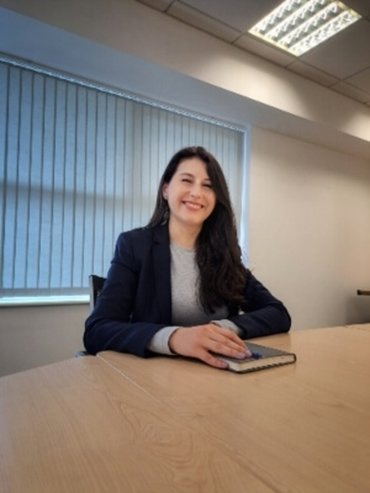
Expanding horizons: the collaborative culture at AtkinsRéalis Ireland
Engineering a better future: the power of global teamwork
Related jobs

Everyone belongs
We empower each individual to shine and contribute to our collective impact. We believe in the power of unique perspectives. It’s how we’re engineering a better future every single day.