

Let’s find your next opportunity
AI Assistant: {{ chat.assistant.message }}
{{meta?.totalCount}}
results found
Sort By
{{ job.job_posting_title
}}
{{ job.job_posting_title }}
{{ job.is_cms_job ? (job.cities.split(';').length > 1 ? 'Various locations' : job.location_mappings[0]) : (job.location_mappings.length > 1 ? 'Various locations' : job.location_mappings[0]) }}
{{ job.time_type }}

We are sorry there are no jobs that match your exact criteria. Try a new search term, or use the filters to continue browsing for available opportunities.
Suggested roles matches
{{ job.title }}
{{ job.title }}
{{ [job.cities[0], job.regions[0], job.countries[0]].join(', ') }}
Various locations
We are sorry there are no jobs that match your exact criteria. Try a new search term, or use the filters to continue browsing for available opportunities.
Let’s find your next opportunity
{{ job.job_posting_title
}}
{{ job.job_posting_title }}
{{ job.is_cms_job ? (job.cities.split(';').length > 1 ? 'Various locations' : job.location_mappings[0]) : (job.location_mappings.length > 1 ? 'Various locations' : job.location_mappings[0]) }}
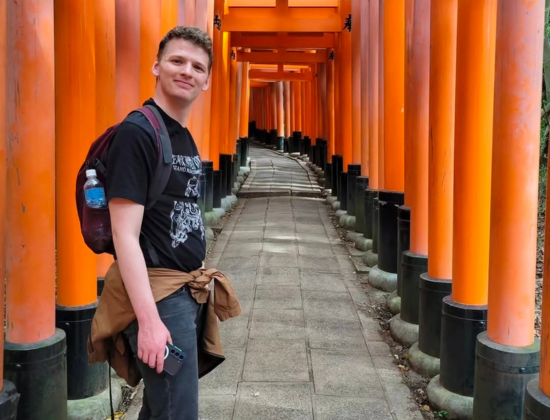
Jonty is a Senior Environmental Consultant at AtkinsRéalis, based in Manchester. He works as an environmental coordinator on Arrow Valley Solar, a Development Consent Order (DCO) for a 500MW solar farm across Worcestershire and Warwickshire. As part of his role, he is responsible for managing environmental specialists to help shape the scheme and the mitigation measures embedded within it.
What does your day actually look like?
“My day-to-day is quite varied. One week I may be authoring technical reports like environmental statement chapters, and another week I might be meeting clients face to face or attending public consultation events. The responsibilities vary between project and client. I’ve worked for a number of clients over the years, including Network Rail, National Grid, Lancashire County Council and Greater Cambridge Partnership.
At the moment the biggest project I’m working on is Arrow Valley Solar. On this project I act as environmental coordinator, liaising closely with the client, technical teams and other stakeholders to produce an environmental statement to submit as part of the DCO.”
Who else is in the room?
“As a coordinator I work across multiple teams, but on Arrow Valley I work particularly closely with the heritage team. They’ve been surveying across the site to assess the scheme’s potential impact on listed buildings, buried archaeology and the wider historic character of the area.
It’s been fascinating sitting in on technical discussions about the potential for archaeological finds across the site. It really makes you appreciate that there are traces of history all around us that are worth protecting. I’ve learned a lot from that team, and I’ve taken it into conversations with local residents and other stakeholders during consultation.”
“There are traces of history all around us that are worth protecting.”
What’s the best opportunity you’ve had on the project?
“Leading a whole new approach to consultation on Arrow Valley. The rules governing consultation for DCOs changed recently, and the planning and environment team were given the chance to develop something more creative. We are now getting more targeted feedback from local communities on our design, our assessment methodologies and our baseline, which will help shape the project going forward.
It’s progressing well so far, and I’ve taken away valuable, specific feedback we can use in the scheme’s design development.”
Has anything a local resident said ever changed the design of the scheme?
“Yes, and consultation feedback has been critical in shaping Arrow Valley Solar.
On one of our sub-sites we were proposing to put solar panels on fields that sloped towards a village, which would have had a visual impact on the village’s character. Once we had initial feedback from the community about how visible the panels would be, we discussed the area further with our landscape and ecology teams and used that feedback to set the panels back over the other side of the hill.
We kept the area where the panels were removed inside our project boundary though, so we can use that land to create new habitats as part of our biodiversity net gain strategy.”
What happens before anything appears on site?
“One of the things people might not appreciate is just how much coordination goes into submitting a DCO. Behind all those documents there’s a small army of environmental coordinators, planners, technical specialists, communications teams and engineers. The final application is the culmination of hundreds of emails, meetings, phone calls and workshops.
At times it’s very challenging, and it takes a lot of attention to detail, but it’s all worth it once the application goes in.”
And outside work?
“I’m a keen wargamer, and I spend a lot of my weekends painting miniatures and playing out battles on the tabletop. I started during COVID as a way to pass the time and reconnect with some old school friends, and it’s ballooned into my favourite pastime. I find miniature painting incredibly relaxing. I also sometimes play wargames competitively and a few years ago I won a bronze medal at a national event.”
If this sounds like your kind of work, we’re hiring across our Environment practice. Explore our open roles.
Related blogs
What does it take to consent a 90km power line? Oliver on North Humber to High Marnham
Meet Oliver and read how he helps deliver major power and renewables projects.
Consents at scale: Scott on the Transpennine Route upgrade
From approvals to delivery, read how Scott helps shape major rail programmes.
What does consultation actually change? Joanne on 1,600 homes at South West Rugby
From community feedback to major development, read how Joanne is helping shape the future of South West Rugby.
Planning for new communities with 136,000 new residents: Wesley on the Greater Cambridge Infrastructure Delivery Plan
Meet Wesley, a Planning Consultant helping shape the future of one of England's fastest-growing regions.
Why leave local government after 22 years? Lewis on reservoirs, and the project that changed his mind
Meet Lewis, an Associate Town Planner helping deliver some of the UK's largest water infrastructure projects.

Building the case for Liverpool Central
Meet Aaron, the masterplanner connecting transport, place and investment at Liverpool Central.
Designing a school around a pupil’s day
From sensory spaces to outdoor learning, meet Lorenzo and the thinking behind Lisburne SEND School.

Bringing a buried canal back to life
From concept to completion, Ben reveals how Cardiff’s Canal Quarter was transformed for people and nature.
From footpaths for penguins to integrating Nairobi Central Station into the heart of the City
From local parks to international transport hubs, discover how Neil has spent 22 years designing places that bring people together.
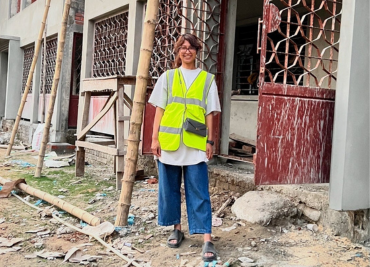
Shely on climate-resilient design, village upskilling, and remote project delivery
From family favour to climate-smart homes, read how Shely brought sustainable design to life across continents.
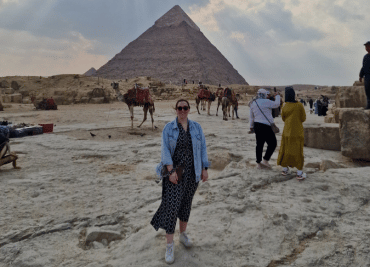
Sam on turning climate science into practical decisions
Meet Sam, a Principal Climate Adaptation Consultant helping clients navigate climate risk with confidence.
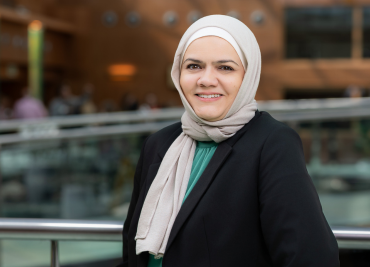
Shaping sustainable impact at scale with Mania
Meet Mania, a sustainability leader turning bold ambitions into infrastructure that delivers lasting value for people, communities, and the environment.
Related jobs

Everyone belongs
We empower each individual to shine and contribute to our collective impact. We believe in the power of unique perspectives. It’s how we’re engineering a better future every single day.