

Let’s find your next opportunity
AI Assistant: {{ chat.assistant.message }}
{{meta?.totalCount}}
results found
Sort By
{{ job.job_posting_title
}}
{{ job.job_posting_title }}
{{ job.is_cms_job ? (job.cities.split(';').length > 1 ? 'Various locations' : job.location_mappings[0]) : (job.location_mappings.length > 1 ? 'Various locations' : job.location_mappings[0]) }}
{{ job.time_type }}

We are sorry there are no jobs that match your exact criteria. Try a new search term, or use the filters to continue browsing for available opportunities.
Suggested roles matches
{{ job.title }}
{{ job.title }}
{{ [job.cities[0], job.regions[0], job.countries[0]].join(', ') }}
Various locations
We are sorry there are no jobs that match your exact criteria. Try a new search term, or use the filters to continue browsing for available opportunities.
Let’s find your next opportunity
{{ job.job_posting_title
}}
{{ job.job_posting_title }}
{{ job.is_cms_job ? (job.cities.split(';').length > 1 ? 'Various locations' : job.location_mappings[0]) : (job.location_mappings.length > 1 ? 'Various locations' : job.location_mappings[0]) }}
Shely is an architect in AtkinsRéalis’ Birmingham studio, and for the last four years she’s had a second job nobody gave her: designing and building two houses in a village in rural Bangladesh, mostly from her desk in the West Midlands.
It started as a favour. Her mum had commissioned a local architect to design a house back in Sylhet and wanted Shely’s opinion on the drawings. Do you want my honest opinion?
Shely asked. She did. Well, if you want to die of heat in the dining room, go ahead, because there were no windows in the dining room.
She didn’t tweak it; she scrapped the design, put it in the bin and started again. Four years on, she has been the architect, project manager, main contractor, supplier and on‑site trainer, running almost all of it remotely across a six‑hour time difference, fitting in early‑morning video site inspections before her own working day began. I’ve basically project managed it, been the main contractor, been the architect, been all the different disciplines,
she says.
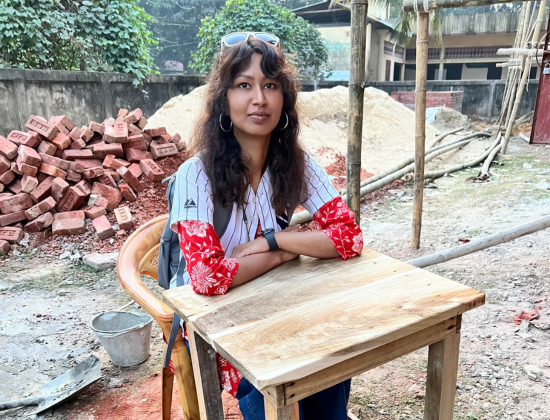
Designing homes that work with the climate, not against it
Shely’s brief to herself was simple: homes that actually work in Bangladesh’s climate. Many newer houses there copy Western layouts (deep plans, single‑sided ventilation, little shading) that leave rooms hot and airless. They’re trying to make them look like UK houses, but they don’t work in that climate,
she says. So she went back to the vernacular (courtyards, verandas, cross ventilation) and combined it with her sustainability background. Shely has worked on the world’s first non‑domestic Passivhaus EnerPHit building, and has acted as a sustainability expert for the RIBA Awards.
The result is two mirrored, twin two‑storey houses on a north‑south axis: passive solar design, shaded verandas, and cross, stack and purge ventilation around a shared courtyard, built to stay comfortable across the seasons through passive design rather than expensive kit. You’re using the wind, you’re using the sun, everything around you before you start adding stuff on,
she explains. Every detail was adapted to what was buildable locally: a reinforced concrete frame with brick infill, ten‑hole bricks from Dhaka to mimic a cavity wall, stone surfaces to withstand the humidity, and, because winters are now dangerously cold in homes built to stay open, real windows instead of traditional shutters. She built in future‑climate thinking too, such as raising the houses to roughly twice the usual height against worsening floods. One ornate front door began as a whole tree, dried for a year, then carved to her simplified design. (Desh
is how Bengali speakers refer to the homeland, hence the Desh Houses.)
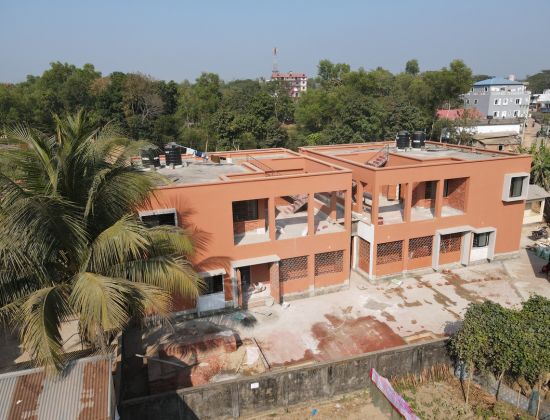
She is careful not to over‑claim: whether it holds up against future climate change is what she now wants to test. ARC (Architecture for Resilient Communities) is using the houses as a funded case study for post‑occupancy monitoring. They’re not just houses,
she says. They’re a piece of research.
Building the skills and the supply chain from scratch
Much of what she wanted hadn’t been done locally: tiling with spacers and movement joints, precise setting‑out, UK stair geometry, drainage falls. So she trained the teams herself, sometimes for weeks. One carpenter told her he’d learned more in three weeks with her than in fifty years on the tools. The knock‑on effect is real: The main contractor has become the most sought‑after contractor in the region after working on the houses.
With materials patchy or unavailable, she built her own network from nothing: I’ve got my own supply chain, I’ve got my own subcontractors.
She ran procurement, contracts and finances across four years, working around a monsoon season that leaves only a narrow build window each year.
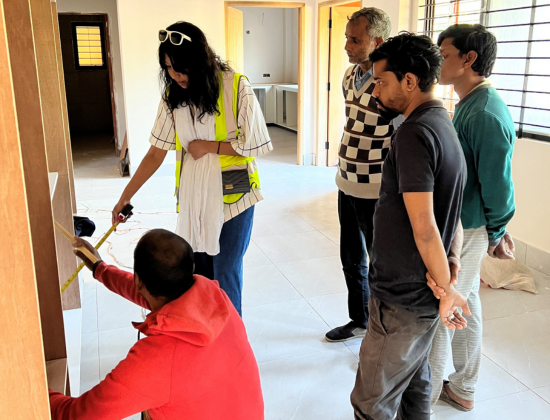
A career built on backing herself into the unknown
That appetite for a new set of rules runs through Shely’s whole career. Her background was in education and schools; at AtkinsRéalis she’s moved through residential and commercial work (including for the Government Property Agency), became the defence lead for the Birmingham office, and is now being seconded to Birmingham Airport as a design manager, her first move into aviation. Each new sector, as she puts it, is a different set of rules, but it’s still architecture.
The houses feed back into her UK work too: designing a school from scratch, she now reaches instinctively for climate‑resilient moves like cross ventilation, ahead of any formal modelling.
She’s quick to credit the people around her. Her mentor, Helen, has been brilliant throughout; her line manager, Jamie, backed a six‑week block on site; and her colleague Rae effectively did the landscape design in her spare time.
Coming full circle
There is a personal thread underneath all of this. Architecture is a seven‑year course, and when Shely started out, a qualification was often seen as something for a marriage CV rather than a career: a pressure plenty of young people, in her community and well beyond it, still recognise today. She took the path anyway, as one of the first from her community to do so, and things have moved on a long way since. Since doing the houses, it’s almost like I’ve reconnected,
she says. There is a recognition now that wasn’t there at the start, and she sees others from her community following her into architecture and looking to her as they do it. It’s almost gone full circle.
The effect is clearest on site, next to a school whose girls watch her run the job. They’re seeing me being the boss,
she says. It shows them they can achieve anything.
Shely is also putting her mum’s and aunt’s names on the gate, where a male relative’s name would traditionally go, on land the two women, both widowed young after their family’s land was taken, can finally call their own.
Her advice is really just how she’s approached the whole thing: back yourself, learn the new set of rules, and get on with it. If I can do this project, I can do anything.
Interested in a career at AtkinsRéalis? Explore our latest opportunities.
Related blogs
AtkinsRéalis UK early careers
Your future starts here. At AtkinsRéalis, you'll work on projects that shape communities, drive innovation and create a better world. Whether you're interested in graduate, placement or apprenticeship opportunities here you’ll discover how you can make a meaningful impact from day one.
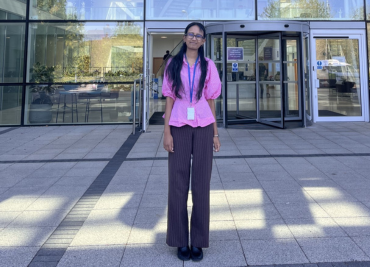
From university to industry: my Placement journey at AtkinsRéalis
What It's really like to complete a placement at AtkinsRéalis.

From the largest lake in Northern Europe to the future of the UK's water: inside our AMP8 work with Yorkshire Water
AtkinsRéalis is helping shape the future of the UK's water infrastructure through Yorkshire Water's AMP8 programme, delivering projects that strengthen water security, improve resilience, and support sustainable growth. From exploring the transfer of water from Kielder Water across regions to developing innovative new water resources, our teams are tackling complex challenges that will have a lasting impact for generations to come.
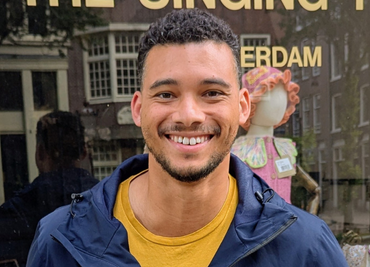
How I build confidence into complex projects
Meet Aston, Regional Director in AtkinsRéalis’ Estimating & Cost Advisory team, as he shares how he helps clients build confidence in complex infrastructure projects while supporting the growth of future talent.

Risk management careers: building confidence, skills and client relationships
From graduate hire to risk manager, discover how Eleanor has grown her career at AtkinsRéalis while helping clients navigate uncertainty and deliver major projects.
AtkinsRéalis named in The Times Top 50 Employers for Gender Equality 2026
Fourth year running, independently assessed. See what’s actually changed in how we hire, develop and support our people.

Sam on turning climate science into practical decisions
Meet Sam, a Principal Climate Adaptation Consultant helping clients navigate climate risk with confidence.
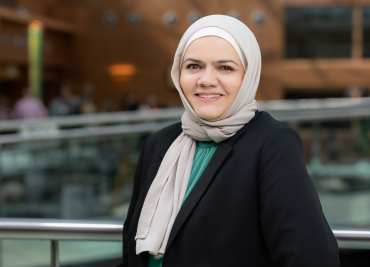
Shaping sustainable impact at scale with Mania
Meet Mania, a sustainability leader turning bold ambitions into infrastructure that delivers lasting value for people, communities, and the environment.
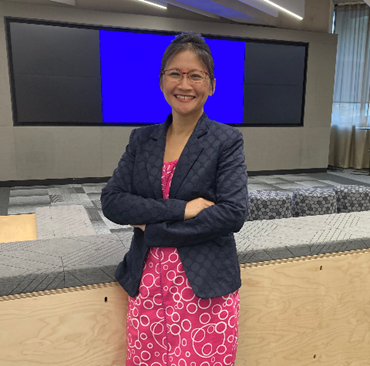
It's a great time to build your career in Water
As Water Sector Lead at AtkinsRéalis, Mei leads projects focused on water resilience, environmental improvement and major water infrastructure programmes. Her work supports sustainable water management and long-term climate resilience.
AtkinsRéalis named among the 50 GREAT British Employers of Veterans
Proven commitment to those who’ve served, see how AtkinsRéalis supports Armed Forces talent beyond words.
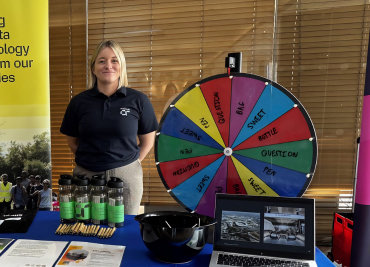
It's about more than what we build
Meet Ellie and read how she turns infrastructure projects into real opportunities for people and communities.
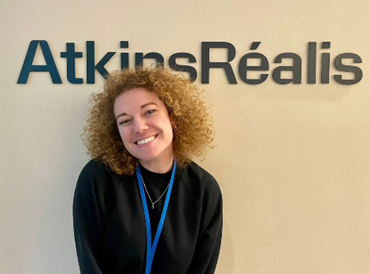
She engineers, she leads, she wins
#EngineeringBetter: insights from our 2024 WICE double award winner
Related jobs

Everyone belongs
We empower each individual to shine and contribute to our collective impact. We believe in the power of unique perspectives. It’s how we’re engineering a better future every single day.