

Let’s find your next opportunity
AI Assistant: {{ chat.assistant.message }}
{{meta?.totalCount}}
results found
Sort By
{{ job.job_posting_title
}}
{{ job.job_posting_title }}
{{ job.is_cms_job ? (job.cities.split(';').length > 1 ? 'Various locations' : job.location_mappings[0]) : (job.location_mappings.length > 1 ? 'Various locations' : job.location_mappings[0]) }}

We are sorry there are no jobs that match your exact criteria. Try a new search term, or use the filters to continue browsing for available opportunities.
Suggested roles matches
{{ job.title }}
{{ job.title }}
{{ [job.cities[0], job.regions[0], job.countries[0]].join(', ') }}
Various locations
We are sorry there are no jobs that match your exact criteria. Try a new search term, or use the filters to continue browsing for available opportunities.
Let’s find your next opportunity
{{ job.job_posting_title
}}
{{ job.job_posting_title }}
{{ job.is_cms_job ? (job.cities.split(';').length > 1 ? 'Various locations' : job.location_mappings[0]) : (job.location_mappings.length > 1 ? 'Various locations' : job.location_mappings[0]) }}
Puerto Rico’s power grid is being rebuilt for long‑term resilience and AtkinsRéalis engineers are leading the work that keeps communities connected.
In Puerto Rico, the power grid is not an abstract system. It is the thing people notice when it fails.
In 2017, Hurricane Maria hit the island as a Category 4 storm. Most of Puerto Rico’s 3.4 million residents lost electricity. Repairs took nearly eleven months, making it the second longest electrical blackout in world history. Then, in 2022, Hurricane Fiona brought more damage.
That history is why this work carries weight.
Puerto Rico’s transmission and distribution infrastructure doesn’t need surface-level fixes. It needs to be strengthened and hardened in ways that last, across power lines and substations that serve communities across the island.
AtkinsRéalis enters the story there, selected by LUMA to deliver architecture and engineering design services to permanently improve, strengthen and harden Puerto Rico’s power grid. For an engineer, that changes the shape of the job. You’re not maintaining business as usual. You’re working on infrastructure people depend on every day, in a place that knows exactly what grid failure costs.
What the work actually looks like
The scope is wide, which means the work doesn’t stay inside a single discipline or phase.
One week, you might be deep in design for transmission and distribution improvements, working through the technical detail of a power line or substation project. Another, you could be coordinating around permitting, environmental studies, or historical preservation requirements. As projects move forward, work shifts closer to the field: supporting construction, navigating right-of-way considerations, or keeping complex delivery moving across engineering, project management, and public-facing conversations.
That range is part of the point. You see the way infrastructure actually gets delivered: why design decisions must incorporate environmental realities, where construction needs shape the path forward, and how community outreach fits into the larger picture. Technical work, but never in isolation.
Part of a bigger story
Puerto Rico is one part of a growing Power & Energy portfolio across the US.
AtkinsRéalis brings more than 100 years of experience delivering end-to-end power solutions. In the US, that’s showing up across different parts of the energy system: grid and utility work, major program management and owner’s engineering through a master service agreement with Avangrid Networks, and industrial delivery like the tech stack for Hanwha Qcells’ solar manufacturing facility in Georgia.
Puerto Rico sits naturally in that story, drawing on the same ability to connect planning, design, construction support, and project management, while staying rooted in the specific realities of the island’s grid. AtkinsRéalis has worked here since 1993. After Maria and Irma, the team helped administer $1.9 billion in federal recovery funds. And 99% of the Puerto Rican team are from Puerto Rico, they’re not just working on the grid; they’re working on their own communities’ infrastructure.
What it feels like
Large infrastructure projects demand a lot. They require you to hold onto technical detail while keeping sight of the bigger system. They push you to work across disciplines, phases, and stakeholders. And they call for patience, because durable infrastructure is not delivered in a straight line.
They also put you close to the real consequences of the work. Engineering decisions here are tied directly to whether the grid holds next time. It’s layered, visible, and it matters to people far beyond the project team.
So, if you can picture yourself in it, now imagine this: technical work with weight behind it. Plans that lead to physical change. A grid that has failed before, and a team working carefully, piece by piece, to make sure it holds the next time mother nature tests it.
Some projects fill a résumé. Others stay with you long after the work is done.
Ready to be part of it? Explore our Power & Energy roles in the US and join the team that’s building what lasts.
Related blogs
Building the factory behind the energy transition
The US is rapidly scaling clean‑energy manufacturing, and AtkinsRéalis is helping build the digital systems that keep major industrial programs moving with control.
The grid is changing, and so is the work behind it
As the grid evolves, the engineering behind it is changing too. Discover the work guiding major utility projects across the Northeast.
Rebuilding Puerto Rico’s power grid. Engineering resilience that lasts.
Puerto Rico’s power grid is being rebuilt for long‑term resilience and AtkinsRéalis engineers are leading the work that keeps communities connected.
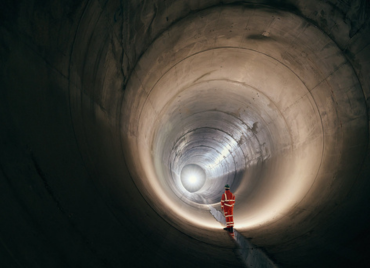
Thames Tideway Tunnel
Designing the western section of London’s 25km super sewer, AtkinsRéalis helped deliver one of the largest wastewater infrastructure upgrades in the city’s history, transforming how London protects the Thames for generations.

How AtkinsRéalis UK&I supports employee wellbeing?
A quick look towards a healthier, happier workplace. Find out how we help you to thrive.
“Recognition, reflection, and responsibility”: Nidhie on leading UK infrastructure frameworks from India, mentoring with purpose, and what IWD really means
From Gurgaon to the UK, read how Nidhie drives complex infrastructure delivery with clarity, calm, and conviction.

“Small improvements at design stage can make a big difference”: Pooja on water infrastructure, working across borders, and never giving up on yourself
From designing critical systems to strengthening global teamwork, read how Pooja creates meaningful impact behind the scenes.
“I discovered a deep love for art”: Sangeeta on nuclear engineering, fusion technology, and finding creativity where you least expect it
Meet Sangeeta, an engineer who discovered a surprising love for art. Read how she blends creativity with her work on global projects.
Mayowa: Aligning budget, planning, and strategy to deliver excellence
Meet Mayowa, Project Manager at AtkinsRéalis.
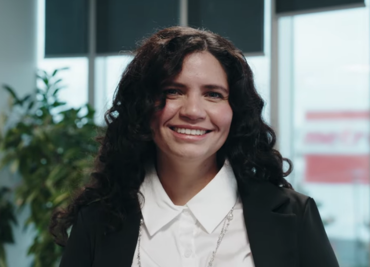
At the heart of environmental assessments: Nancy’s essential role
Meet Nancy, Senior Environmental Planner and Project Manager at AtkinsRéalis.

At the heart of nuclear safety: Yang’s civil engineering expertise
Discover Yang, a senior nuclear civil engineer at Candu Energy Inc., an AtkinsRéalis company.
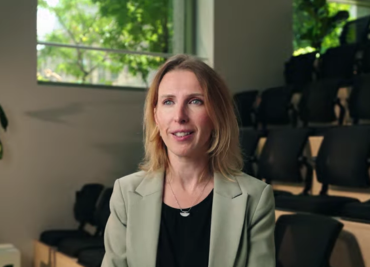
Coralie, at the crossroads of strategic communication and the field
Meet Coralie, Senior Manager, Communications, Projects and Assets at AtkinsRéalis.
Related jobs

Everyone belongs
We empower each individual to shine and contribute to our collective impact. We believe in the power of unique perspectives. It’s how we’re engineering a better future every single day.