

Let’s find your next opportunity
AI Assistant: {{ chat.assistant.message }}
{{meta?.totalCount}}
results found
Sort By
{{ job.job_posting_title
}}
{{ job.job_posting_title }}
{{ job.is_cms_job ? (job.cities.split(';').length > 1 ? 'Various locations' : job.location_mappings[0]) : (job.location_mappings.length > 1 ? 'Various locations' : job.location_mappings[0]) }}
{{ job.time_type }}

We are sorry there are no jobs that match your exact criteria. Try a new search term, or use the filters to continue browsing for available opportunities.
Suggested roles matches
{{ job.title }}
{{ job.title }}
{{ [job.cities[0], job.regions[0], job.countries[0]].join(', ') }}
Various locations
We are sorry there are no jobs that match your exact criteria. Try a new search term, or use the filters to continue browsing for available opportunities.
Let’s find your next opportunity
{{ job.job_posting_title
}}
{{ job.job_posting_title }}
{{ job.is_cms_job ? (job.cities.split(';').length > 1 ? 'Various locations' : job.location_mappings[0]) : (job.location_mappings.length > 1 ? 'Various locations' : job.location_mappings[0]) }}
Turning urban heat into action
Urban heat is one of the most urgent and least visible challenges facing cities today. It affects public health, infrastructure performance, and everyday quality of life, especially for vulnerable communities. For Sahil, one of the most meaningful parts of his work has been helping turn that challenge into something cities can act on.
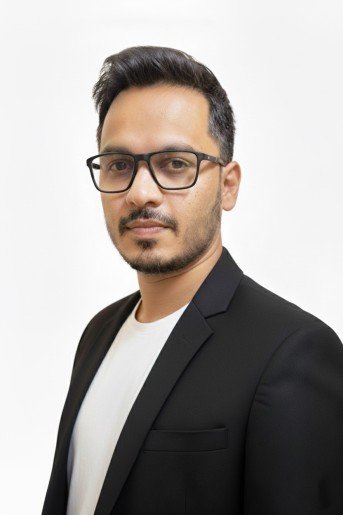
A standout experience in his career at AtkinsRéalis was contributing to the World Bank’s Handbook on Urban Heat Management for Cities in the Global South. Sahil supported the technical writing of the publication and helped organize and facilitate a stakeholder workshop in Delhi. He also led the development of knowledge dissemination materials designed to make complex climate and heat-related insights more accessible and useful for diverse audiences.
That combination of technical depth and practical communication matters. Urban heat is often under-recognized, yet its effects are immediate and unevenly felt. Work like this helps equip cities with tools they can use in planning, design, and policy. It also shows what purposeful impact looks like in practice, grounded in real community needs and built to inform decisions at scale.
Shaping resilient futures from Bangalore
Sahil is a Lead Urban Designer and Planner based in Bangalore, working in the Sustainable Futures team within the Environment practice at AtkinsRéalis. His background is in infrastructure and environmental design, and his focus is on advancing climate resilience and sustainable urban development.
In practical terms, that means translating climate risks into spatial strategies, shaping city-level plans, and supporting climate adaptation and sustainability initiatives. His work spans policy, planning, and implementation. It is about helping cities and clients move toward more resilient, low-carbon, and future-ready urban environments.
A research-by-design approach
One phrase Sahil returns to is “research-by-design.” It captures something important about the way his team works. The goal is not simply to respond to a fixed brief. It is to bring evidence, design thinking, and multidisciplinary collaboration together in a way that helps shape better outcomes from the start.
As Sahil sees it, engineering matters for sustainable development because it is about “translating vision into tangible, implementable solutions.” That translation is critical. Ambition on its own is not enough. Cities need approaches that are technically sound, grounded in context, and capable of moving from analysis into action.
International collaboration is a defining part of that process. Sahil points to the value of working with multidisciplinary teams across geographies, especially when the issues are complex and global in nature. In urban climate work, better answers come from combining local understanding, technical expertise, and shared problem-solving.
Where digital innovation meets climate resilience
Looking ahead, Sahil is especially energized by the growing role of digital tools in climate action and urban resilience. He sees remote sensing, digital twins, and AI as changing not only how cities are analyzed, but how decisions are made.
These tools make it possible to move beyond static planning toward more dynamic, data-driven approaches. They can support better modeling of climate risks, real-time monitoring, and scenario testing. Just as importantly, they help close the gap between insight and implementation. Strategies become more precise, scalable, and responsive to the realities cities face.
For professionals interested in urban planning, climate resilience, sustainable urban design, or environmental consultancy, that intersection of engineering and digital innovation is becoming increasingly important. It opens up new ways to understand urban systems and design interventions that are practical as well as forward-looking.
Working at the forefront of urban change
At AtkinsRéalis, Sahil sees real momentum in the way engineering expertise, digital capability, and cross-disciplinary collaboration are coming together. For him, that is what makes the future of this work so compelling. It is not technology for its own sake. It is technology used thoughtfully to support more resilient urban outcomes.
And for anyone thinking about joining his team, his message is simple. This is a chance to work at the forefront of some of the most pressing challenges cities are facing today. The work is complex, grounded in real-world issues, and increasingly shaped by new tools and new forms of collaboration. For people who want to bring technical expertise to climate adaptation and sustainable urban transformation, it is a field with real urgency and lasting relevance.
Passionate about shaping sustainable cities? Explore opportunities at AtkinsRéalis and help build more resilient communities for the future.
Related blogs

Turning challenges into opportunities: Bajarang's journey at AtkinsRéalis
What happens when a complex challenge becomes an opportunity to innovate? Bajarang’s story.

Building more than projects: Ragavendran’s journey of growth
Some projects test your technical skills. Others change how you see your career. For Ragavendran, both happened along the way.

Beyond the design: Praveen’s journey from delivery to ownership at AtkinsRéalis
Praveen has grown by taking on new challenges, broadening his perspective, and turning experience into greater ownership.

Designing with purpose, leading with confidence: Lekhana’s journey at AtkinsRéalis
From solving complex engineering challenges to leading teams, Lekhana’s journey shows how the right opportunities can transform not just what you do, but who you become.

Building more than infrastructure: Kiran's story of impact at AtkinsRéalis
For Kiran, engineering is about more than designing infrastructure. It is about solving challenges, learning from others, and creating value for communities.

Choosing potential over position: Abhijith's journey from Trainee to Civil Lead.
Abhijit's journey shows how choosing the right opportunity can lead to extraordinary career growth.

The confidence to explore, the courage to innovate, and the opportunity to grow: Sindhu's journey at AtkinsRéalis.
Sindhu joined AtkinsRéalis through the India Graduate Development Programme in 2020. Five years later, her journey reflects the power of curiosity, innovation, and a willingness to step beyond her comfort zone.

From delivery to legacy: Smita on engineering what matters
From project delivery to quality leadership, Smita's journey has been guided by a simple belief: great engineering is not just about what we build, but the impact it leaves behind.

Designing for better learning environments, from Bengaluru to the UK.
Discover how Bhavya is helping design sustainable, future-ready education spaces for UK communities while building her architectural career at AtkinsRéalis.

From Pune to UK rivers: what Aishwarya’s intern work in water quality looks like.
At AtkinsRéalis, meaningful environmental impact can begin early in your career. As an intern in the Water Management Consultancy team, Aishwarya is helping assess water quality and pollution risks in UK rivers, applying her academic knowledge to real-world challenges that support healthier ecosystems and better environmental outcomes.
Building energy resilience where it matters most
Whether it's supporting global net-zero commitments or helping improve energy resilience in remote communities, Mohit’s work reflects the growing role sustainability professionals play in shaping a more sustainable future.
Why Pankaj came back to AtkinsRéalis to grow his sustainability career
From graduate engineer to Principal Sustainability Consultant, explore Pankaj’s journey and his work shaping sustainable building performance across the Middle East.
Related jobs

Everyone belongs
We empower each individual to shine and contribute to our collective impact. We believe in the power of unique perspectives. It’s how we’re engineering a better future every single day.