

Let’s find your next opportunity
AI Assistant: {{ chat.assistant.message }}
{{meta?.totalCount}}
results found
Sort By
{{ job.job_posting_title
}}
{{ job.job_posting_title }}
{{ job.is_cms_job ? (job.cities.split(';').length > 1 ? 'Various locations' : job.location_mappings[0]) : (job.location_mappings.length > 1 ? 'Various locations' : job.location_mappings[0]) }}
{{ job.time_type }}

We are sorry there are no jobs that match your exact criteria. Try a new search term, or use the filters to continue browsing for available opportunities.
Suggested roles matches
{{ job.title }}
{{ job.title }}
{{ [job.cities[0], job.regions[0], job.countries[0]].join(', ') }}
Various locations
We are sorry there are no jobs that match your exact criteria. Try a new search term, or use the filters to continue browsing for available opportunities.
Let’s find your next opportunity
{{ job.job_posting_title
}}
{{ job.job_posting_title }}
{{ job.is_cms_job ? (job.cities.split(';').length > 1 ? 'Various locations' : job.location_mappings[0]) : (job.location_mappings.length > 1 ? 'Various locations' : job.location_mappings[0]) }}
The structural engineering market is experiencing rapid changes, with Net Zero goals, advanced technology, and environmentally conscious building practices becoming the new bread and butter of the industry.
These changing tides place demands on professionals to stay relevant through upskilling, certifications, and an awareness of industry trends.
Knowing how to effectively represent your capabilities will play a vital role in securing your ideal job—a process that largely depends on the quality of your structural engineering resume.
Creating an optimized structural engineering resume
Perhaps you're an experienced professional who's written more than a few resumes in your lifetime. If that's you, you may still be surprised to read about the less obvious factors a potential employer could hone in on when looking at your resume for the first time.
Regardless of your experience level, we'll take you through the most important points to include on your structural engineering resume—including how best to leverage your chances of getting through to the interview stage.
Here's what you need to know:
How do you write a structural engineer resume?
Begin with an elevator pitch; a short personal statement that emphasizes the most important things you want your potential employer to know about who you are.
From there, you'll want to highlight your relevant qualifications, experience, and certifications. Listing your certifications in a uniform, structured way is desirable, for example:
- Name and job title
- Employer or institution
- Dates of employment
- Relevant details and skills demonstrated
Catch your potential employer's attention by tailoring each section to the job you're applying for. How? Simply by using the words of the job listing throughout your resume.
What is a good objective for a structural engineer resume?
Your objective is a short statement that illustrates your goals in relation to the job you're applying for, as well as why you're the best candidate for the role.
As such, there's no "best" objective for a structural engineering resume; it's unique and relative to the person who's applying, the position they're applying for, and the company they're applying to.
There are, however, some helpful rules of thumb to put you on the right path:
Honing in on your technical knowledge and structural engineering skills, qualifications, and relevant certificates is a good place to begin.
Highlighting your professional accolades and strengths is often effective, too; think along the lines of your ability to work in a team, self-motivation, analytical capacities, design software literacy, and years of experience.
How long should a senior engineer's resume be?
If you're experienced in the field and seeking to develop your structural engineering career path, you may find yourself looking toward senior engineering jobs.
A senior engineer's resume should reflect the years of industry experience they have under their belt.
Rather than be overly prescriptive about how long it should be, it may be more useful to think in terms of the amount of experience you should have when applying for a senior engineering role—and representing that accordingly.
Employers typically look for a minimum of five years of industry experience, a bachelor's degree, experience supervising teams, and an ability to optimize workflows.
What is the profile summary for a senior civil engineer?
Much like the structural engineering resume objectives discussed already, the profile summary for a senior civil engineer should place the most important elements of your professional experience front and center.
This is an ideal place to list your years of experience, most impressive professional achievements, and areas of expertise.
How far back should a resume go?
Most resume-building experts tend to agree that 10-15 years of experience is the ideal amount to list on your resume.
With that in mind, there's a lot to be said for tailoring your structural engineering resume to the job you're applying for; if you have experience beyond 15 years that you think is extremely relevant, it's worth including.
Start showing off your structural engineer resume
At AtkinsRéalis, we pride ourselves on being the ultimate destination for skilled structural engineers across the USA who are eager to carve out their professional path and find their perfect fit.
With an array of structural engineering positions available, ranging from entry-level roles to senior positions, we provide a diverse range of opportunities for engineers at every stage of their career journey.
Explore the structural engineering jobs available and start submitting your optimized resume today.
Related blogs

You don't have to be an engineer to build a career in water
Meet Grace and read how she is helping shape safer, stronger communities through water projects.

I came back after nearly two decades. It felt like coming home
Meet Necolle and read how she's helping communities become more resilient to flooding.

I'm a Planner, and I do a lot less planning than you'd think
Read how Armani, a Planner at AtkinsRéalis, expanded his role beyond floodplain management and found new ways to make a difference.

From intern to design engineer: Kayla on building a water career in Texas
Meet Kayla, an Engineer helping deliver the clean water infrastructure communities rely on every day.

Making the map where there wasn't one
Meet Zane, a Water Resources Engineer helping communities better understand and prepare for flood risk.

Nicole on public service, safety, and building transportation that lasts
Meet Nicole and read how she's driving safer, more resilient transportation networks.
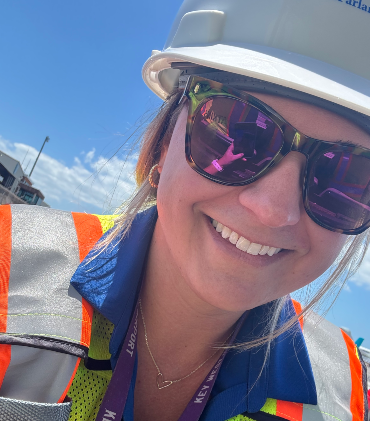
From engineer to project leader: Serafina on aviation, mentorship, and growth in Florida
Meet Serafina from our Tampa office, where she's helping airports grow and communities thrive.

Mike on mega projects, reinvention, and aviation at Denver International
From mega projects to airport expansion, read how AtkinsRéalis helped Mike grow beyond project delivery.
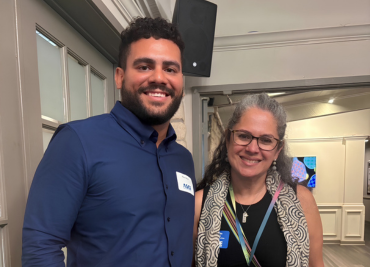
From intern to project manager: Felix on nine years of building an aviation career
Meet Felix, a Project Manager helping shape the future of aviation through digital innovation and major airport projects across Texas.

Chen Zhou on building better transit systems
Connecting people, operations, and infrastructure is what make transit work.

Sustainability isn’t a job title. It’s a way of practising.
From early lessons in solar living, discover how Kristi is redefining sustainability in design and preparing for LEED v5.

Building the factory behind the energy transition
The US is rapidly scaling clean‑energy manufacturing, and AtkinsRéalis is helping build the digital systems that keep major industrial programs moving with control.
Related jobs

Everyone belongs
We empower each individual to shine and contribute to our collective impact. We believe in the power of unique perspectives. It’s how we’re engineering a better future every single day.