

Let’s find your next opportunity
AI Assistant: {{ chat.assistant.message }}
{{meta?.totalCount}}
results found
Sort By
{{ job.job_posting_title
}}
{{ job.job_posting_title }}
{{ job.is_cms_job ? (job.cities.split(';').length > 1 ? 'Various locations' : job.location_mappings[0]) : (job.location_mappings.length > 1 ? 'Various locations' : job.location_mappings[0]) }}
{{ job.time_type }}

We are sorry there are no jobs that match your exact criteria. Try a new search term, or use the filters to continue browsing for available opportunities.
Suggested roles matches
{{ job.title }}
{{ job.title }}
{{ [job.cities[0], job.regions[0], job.countries[0]].join(', ') }}
Various locations
We are sorry there are no jobs that match your exact criteria. Try a new search term, or use the filters to continue browsing for available opportunities.
Let’s find your next opportunity
{{ job.job_posting_title
}}
{{ job.job_posting_title }}
{{ job.is_cms_job ? (job.cities.split(';').length > 1 ? 'Various locations' : job.location_mappings[0]) : (job.location_mappings.length > 1 ? 'Various locations' : job.location_mappings[0]) }}
Risk sits at the heart of all major infrastructure projects; it helps teams look ahead, make better decisions and respond to uncertainty before it becomes delay, cost pressure or missed opportunity.
At AtkinsRéalis, that work happens at real scale where the risk management professionals in Complex Projects support clients in programmes across transportation, energy, aviation, water and defence.
If you’re considering a career move into risk, this breadth matters. Here, you can apply your skills across sectors, solve complex problems with others and continue to grow. With a client portfolio including National Highways, Network Rail, HS2, Irish Rail, Transport for London, Transport for Greater Manchester, Hinkley Point C, Sizewell C, Rolls Royce, National Grid, Heathrow, Stansted, Thames Water, Scottish Water, and HM Naval Base Devonport – at AtkinsRéalis, risk is not a narrow lane.
What it’s really like to work in risk management at AtkinsRéalis.
We asked some of our team about their journeys, and this is what they told us:
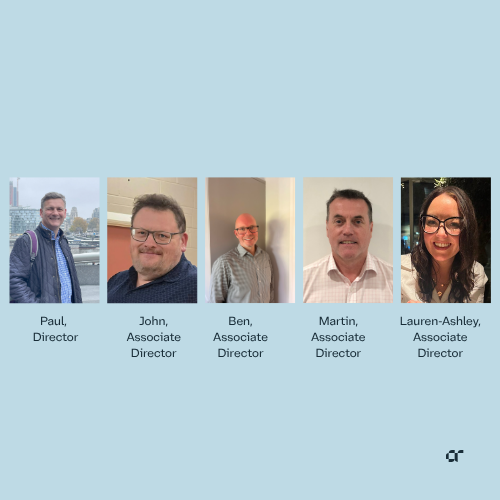
There is no single route into risk
Some people come into risk through engineering. Others arrive through project controls, digital roles, administration, operations, or client‑side delivery. In fact, most do not set out to build a career in risk.
Our backgrounds include civil engineering, geology, offshore exploration, digital mapping, software development, banking, IT, the civil service, land and property, charities, project support and business administration.
Paul started in civil engineering, then moved into risk after deciding he wanted to build on his technical foundation in a different way. John spent 18 years in the civil service before moving into land negotiations at Network Rail, then into risk. Ben began as a geology graduate working offshore, then moved through data analysis, digital mapping, and software development before being pulled into risk workshops and has never looked back.
Martin’s career began in the finance industry and IT, managing risks on regulatory, revenue and IT projects, whilst Lauren‑Ashley started in administration and project support, then shifted into risk after attending a workshop and asking so many questions that the facilitator stopped to ask if the curiosity was real.
As she explains, “I fell into risk management, and it was all through the love of being curious.”
That variety says something important about the profession - risk is built on transferable skills. If you know how to analyze information, build relationships, communicate clearly and stay calm when things are moving quickly, you may already have more of the foundation than you think.
Curiosity is the thread that ties great risk careers together
If there is one quality that comes up again and again, it’s curiosity. Risk professionals ask what, why, when, where, who and how, and they don’t accept the first answer. They keep exploring until they understand what’s really happening, what might happen next, and what the team needs to do about it.
That mindset helps us when joining a new commission. It helps when inheriting work from someone else. And it helps when project teams are under pressure and focused on immediate delivery.
Lauren‑Ashley shares a simple checklist she uses when stepping into a new project: “Understand the scope. Understand the cost plan. Get hold of the schedule. Know the stakeholders. Find out what material already exists. In other words, do not rush to impose a process. Listen first. Observe. Work out how the project operates. Then add value.”
That discipline matters, because risk is about understanding the environment well enough to help people make better decisions.
It also helps overturn one of the biggest misconceptions about the profession. Risk is often seen as a ‘tick‑box exercise’, or as something focused only on what might go wrong. In practice at AtkinsRéalis, we know it’s considerably more powerful. Done well, risk helps teams test scenarios, challenge assumptions, bring activities forward and act earlier.
Embedded, not adversarial
The best risk management is not done from the sidelines. Our risk professionals work closely with multi‑disciplinary project teams and clients, and we can often be the only risk specialist on a major project. So, the ability to collaborate with different disciplines and fit naturally into a team is key.
Martin describes taking on a complex part of the programme on Hinkley Point C and navigating relationships; “By spending time with the team, demonstrating my commitment to the project, coaching people through reviews, and adapting my approach to different personalities, we moved together from resistance to genuine engagement.”
The same principle applies when improving risk culture. It is not just about cleaner reports or better dashboards. It’s about behaviour, relationships, and trust. As Lauren‑Ashley puts it, good risk management starts with “creating a safe place where people can be honest with you.”
Leadership helps too; when senior sponsors want risk to be front and centre, it gives teams permission to focus on it. But trust still must be earned day‑to‑day through relationships, consistency, and value.
The soft skills matter as much as the analysis
Risk is often assumed to be purely analytical. Analysis is important, but it is only part of the picture. Great risk professionals need range, to be analytical and precise. They need to communicate well and bring people with them, to be supportive team players and decisive when action is needed.
As John puts it, “It’s often about using soft skills to try and develop relationships, get the best out of people, to get the information, to ‘sell’ risk management to them.”
On another project in Sweden, the challenge was speed. Ben had just 48 hours to understand a new battery factory project, build rapport with the team, grasp the main issues, and produce outputs in an unfamiliar system. To him, the lesson was clear – “Learn quickly. Focus on the bigger picture. Do not get lost in detail too early. And build trust fast.”
That is why resilience comes up so often too. Some environments are difficult, some teams are under intense pressure, and some clients do not immediately see the value of the process. Being able to stay constructive, adapt your style and keep moving things forward is a core part of the role.
What good risk looks like in practice
The work becomes even more powerful when it is integrated with the rest of project controls. That means strong relationships with planners and estimators and understanding why an analysis is being run in the first place. And it means holding the line on quality, because poor inputs create false confidence.For schedule risk analysis, a fit‑for‑purpose schedule matters - as John says, “We need that schedule to tell us the story of how that project is going to be delivered.” It needs logic and clarity. It cannot simply be a highly detailed plan that looks impressive but is not suitable for analysis.
That is why we challenge when the basics are not there. If the team wants an output quickly but does not understand the time, data, or quality needed to get there, part of the job is to explain that clearly and protect the integrity of the result.
That same blend of pace and discipline was visible on the East Coast Digital Programme. The team started just as COVID changed how everyone worked. Handover had to happen remotely. New processes had to be stood up quickly. A stage gate commitment had to be met within three months. Then came the need for programme‑wide analysis with limited schedule and cost maturity. The response was a clear delivery plan, regular review cycles, and strong communication that kept people aligned under pressure.
That is another hallmark of good risk work at AtkinsRéalis - not just reporting on uncertainty but also helping teams structure their response to it.
A risk career here can take you further than you might expect
You build skills that transfer across sectors and roles. Critical thinking, stakeholder engagement, data analysis, scenario planning, decision making under uncertainty - those capabilities stay relevant even as projects, markets and industries evolve.
Here you can also apply them across sectors; from rail to nuclear, from aviation to local government, from water to defence. You can learn from people with very different experiences and bring your own perspective to projects that really do change the world in which we live.
And you do it in a team culture that values support as much as performance. Our stories are full of people helping each other, sharing experience, coaching others and making space for different perspectives. Here we thrive together by recognizing what each person brings and by creating an environment where everyone can grow.
Our work is connected to some of the most complex infrastructure programmes on the planet - there is real purpose.
Explore risk careers at AtkinsRéalis
If you are analytical, curious, collaborative and motivated by solving real problems, risk could be a stronger fit than you think.You do not need to have followed a traditional path. Many of our people did not. What matters is your ability to ask good questions, work well with others, and turn uncertainty into insight that helps projects move forward.
Explore risk jobs in Complex Projects. Your next move might take you further than you expect.
Related blogs
AtkinsRéalis UK early careers
Your future starts here. At AtkinsRéalis, you'll work on projects that shape communities, drive innovation and create a better world. Whether you're interested in graduate, placement or apprenticeship opportunities here you’ll discover how you can make a meaningful impact from day one.
From university to industry: my Placement journey at AtkinsRéalis
What It's really like to complete a placement at AtkinsRéalis.

From the largest lake in Northern Europe to the future of the UK's water: inside our AMP8 work with Yorkshire Water
AtkinsRéalis is helping shape the future of the UK's water infrastructure through Yorkshire Water's AMP8 programme, delivering projects that strengthen water security, improve resilience, and support sustainable growth. From exploring the transfer of water from Kielder Water across regions to developing innovative new water resources, our teams are tackling complex challenges that will have a lasting impact for generations to come.
How I build confidence into complex projects
Meet Aston, Regional Director in AtkinsRéalis’ Estimating & Cost Advisory team, as he shares how he helps clients build confidence in complex infrastructure projects while supporting the growth of future talent.

Risk management careers: building confidence, skills and client relationships
From graduate hire to risk manager, discover how Eleanor has grown her career at AtkinsRéalis while helping clients navigate uncertainty and deliver major projects.
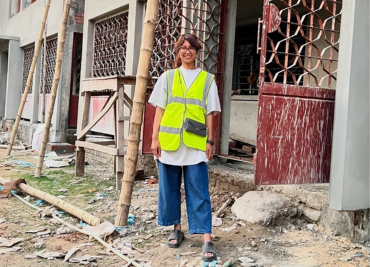
Shely on climate-resilient design, village upskilling, and remote project delivery
From family favour to climate-smart homes, read how Shely brought sustainable design to life across continents.
AtkinsRéalis named in The Times Top 50 Employers for Gender Equality 2026
Fourth year running, independently assessed. See what’s actually changed in how we hire, develop and support our people.
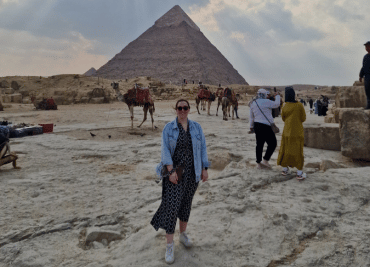
Sam on turning climate science into practical decisions
Meet Sam, a Principal Climate Adaptation Consultant helping clients navigate climate risk with confidence.
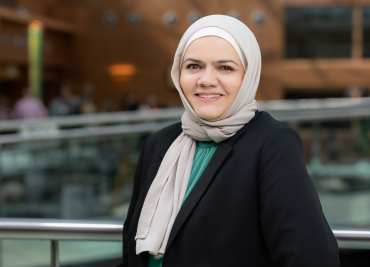
Shaping sustainable impact at scale with Mania
Meet Mania, a sustainability leader turning bold ambitions into infrastructure that delivers lasting value for people, communities, and the environment.
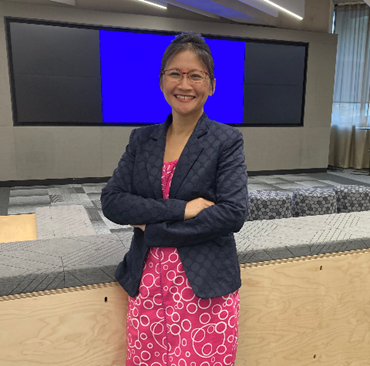
It's a great time to build your career in Water
As Water Sector Lead at AtkinsRéalis, Mei leads projects focused on water resilience, environmental improvement and major water infrastructure programmes. Her work supports sustainable water management and long-term climate resilience.
AtkinsRéalis named among the 50 GREAT British Employers of Veterans
Proven commitment to those who’ve served, see how AtkinsRéalis supports Armed Forces talent beyond words.
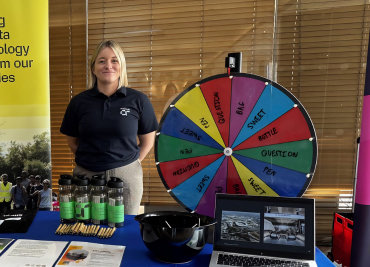
It's about more than what we build
Meet Ellie and read how she turns infrastructure projects into real opportunities for people and communities.
Related jobs

Everyone belongs
We empower each individual to shine and contribute to our collective impact. We believe in the power of unique perspectives. It’s how we’re engineering a better future every single day.