

Let’s find your next opportunity
AI Assistant: {{ chat.assistant.message }}
{{meta?.totalCount}}
results found
Sort By
{{ job.job_posting_title
}}
{{ job.job_posting_title }}
{{ job.is_cms_job ? (job.cities.split(';').length > 1 ? 'Various locations' : job.location_mappings[0]) : (job.location_mappings.length > 1 ? 'Various locations' : job.location_mappings[0]) }}
{{ job.time_type }}

We are sorry there are no jobs that match your exact criteria. Try a new search term, or use the filters to continue browsing for available opportunities.
Suggested roles matches
{{ job.title }}
{{ job.title }}
{{ [job.cities[0], job.regions[0], job.countries[0]].join(', ') }}
Various locations
We are sorry there are no jobs that match your exact criteria. Try a new search term, or use the filters to continue browsing for available opportunities.
Let’s find your next opportunity
{{ job.job_posting_title
}}
{{ job.job_posting_title }}
{{ job.is_cms_job ? (job.cities.split(';').length > 1 ? 'Various locations' : job.location_mappings[0]) : (job.location_mappings.length > 1 ? 'Various locations' : job.location_mappings[0]) }}
Jean‑François: When does metallurgy become an investigative process in support of infrastructure?
I graduated in Metallurgy and Materials Science from Université Laval. From the beginning of my career, I have been fascinated by the behaviour of metallic materials, degradation mechanisms, and ways to extend the service life of infrastructure.
My early professional experience focused primarily on welding inspection and non‑destructive testing. Working in the field allowed me to develop a practical understanding of materials, manufacturing processes, and the challenges encountered on construction sites.
Over the years, I have built extensive expertise in a variety of areas, including protective coatings, structural assessments, and quality control. The diversity of these experiences taught me how to bridge the gap between regulatory requirements, construction constraints, and engineering decisions.

Metallurgy: a true technical investigation
The investigative aspect of my profession is what originally attracted me to the metallurgy and corrosion field.A crack, failure, or corrosion issue never occurs without a reason. Behind every situation is a story that must be understood. The engineer’s role is to gather clues, analyze data, test hypotheses, and identify the root causes of the problem.
“Metallurgical engineering is often comparable to an investigation: the answers are not always obvious, but the clues are there for those willing to take the time to decode them.”
Contributing at every stage of an infrastructure’s life cycle
One of the most interesting aspects of the metallurgy and corrosion field is that our expertise allows us to contribute at virtually every stage of an infrastructure asset’s life cycle.From the earliest stages of project design, we help select materials and protection systems suited to operating conditions. During manufacturing and construction, we contribute through quality control, specialized inspections, and the management of technical challenges by recommending practical solutions.
Once an asset is in service, our work continues through inspections, durability assessments, and engineering analyses that help owners make informed decisions regarding maintenance, rehabilitation, or replacement.
This approach directly supports the safety, reliability, and longevity of infrastructure.
What is metallurgy as applied to infrastructure?
Metallurgy is the science that studies the behaviour of metallic materials to ensure their performance, safety, and durability under a wide range of operating conditions.Contributing to projects that make a real difference
When I look at a bridge, a railway station, or an industrial structure, I see much more than an infrastructure asset. I see the materials that were selected, the technical decisions that were made, the manufacturing constraints, the construction challenges, and the work of everyone who contributed to making the project a reality.My greatest source of pride is not tied to any single project, but rather to having developed recognized expertise and being able to support important decisions when complex technical issues arise.
I am also very proud to see a new generation emerging in the field.
“Watching young engineers and technicians gain confidence and become trusted technical references themselves is one of the most rewarding aspects of my career.”
Innovation in the service of sustainability
The metallurgy and corrosion field is evolving rapidly.Digital technologies, comprehensive surveys, 3D modelling, and data analytics are transforming the way we monitor the condition of infrastructure. Artificial intelligence is also beginning to support the analysis of large datasets and the identification of meaningful trends.
At the same time, the industry continues to explore new materials and innovative solutions that reduce the carbon footprint of infrastructure while improving long‑term performance.
Advice for future engineers
The advice I would give students and young engineers interested in metallurgy or materials science is never to limit themselves to theory alone.Scientific and theoretical knowledge is essential, but practical field experience develops the technical judgment that no textbook can teach. Visiting manufacturing facilities, participating in inspections, and speaking with welders, technicians, and equipment operators all provide an invaluable perspective.
What quality is essential for success in metallurgy and corrosion?
Curiosity. Understanding the behaviour of materials requires careful observation, data analysis, and a willingness to challenge assumptions in order to identify the true causes of problems.Join our experts
Would you like to apply your technical expertise to major projects and collaborate with recognized specialists across multiple disciplines?Explore career opportunities with AtkinsRéalis in Quebec across a wide range of engineering fields, including materials, infrastructure, and specialized inspection.
Related blogs

Cybersecurity Careers: Bita's Journey
For Bita, Cyber Security Specialist at AtkinsRéalis in Vancouver, the journey into cybersecurity wasn't a straight line. It spanned multiple countries, several technical disciplines, and more than a few moments of uncertainty. Today, she helps protect critical infrastructure projects combining technology, engineering, and problem-solving has led to a rewarding career protecting the infrastructure that powers modern life.

Technician careers: a future-focused profession with endless opportunities
At AtkinsRéalis, technicians are key members of our multidisciplinary teams and contribute to large-scale projects across Quebec, Canada, and around the world. From public transit and municipal infrastructure to energy, nuclear, and major industrial projects, their expertise helps deliver some of the country’s most complex and ambitious initiatives.
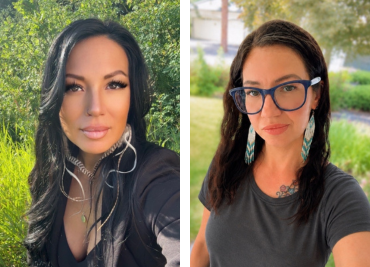
Building careers, strengthening communities: Indigenous voices at AtkinsRéalis
In recognition of the National Day for Truth and Reconciliation, we spoke with two of our Indigenous colleagues in Canada about their career journeys, the importance of representation, and what it means to work in a place where Indigenous voices are valued.
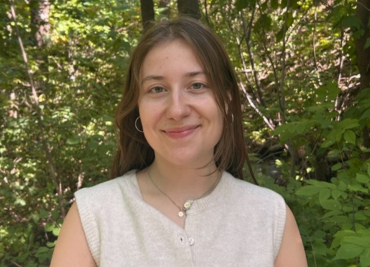
Béatrice: starting a career in rock mechanics at AtkinsRéalis
Béatrice is an Engineer-in-Training (EIT) in Rock Mechanics at AtkinsRéalis. After completing an internship with the Hydropower and Geotechnical team, she joined the company full-time in 2026. Her journey illustrates how internships can pave the way to a rewarding engineering career in Canada.
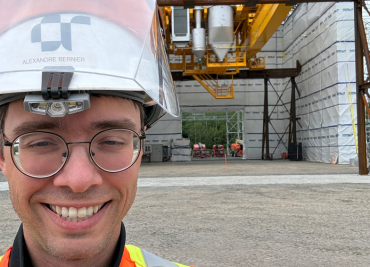
Alexandre, mechanical engineer at AtkinsRéalis: leading industrial lifting projects in Saguenay
When I chose to join AtkinsRéalis in Canada, I wanted to explore a new side of engineering. After working for contractors and equipment manufacturers as an estimator, project manager, and design engineer, this was my first experience with an engineering consulting firm. Today, I can confidently say that this decision has allowed me to broaden my skills while contributing to major industrial projects across the Saguenay-Lac-Saint-Jean region of Quebec.

How artificial intelligence is changing engineering careers
Artificial intelligence (AI) is no longer a futuristic concept. It is now part of the daily reality of many engineering professionals. Whether it is automating certain tasks, quickly extracting insights from large volumes of data, or supporting decision-making, AI is changing how engineers work and reshaping the skills employers seek. Organizations are investing heavily in talent capable of leveraging these new technologies, creating exciting new career opportunities.
How to succeed in a job interview when you are starting your career
When you're beginning your career, every interview is an opportunity to showcase your potential beyond your resume. Whether you're a student, intern, recent graduate, or looking for your first job, you already have skills, accomplishments, and qualities that can make you stand out.
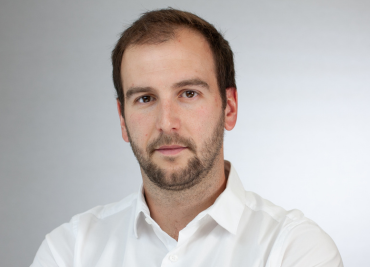
Growing through challenges: Vincent’s journey at AtkinsRéalis
Today, I hold a hybrid role at AtkinsRéalis that combines business development, project management, and technical project delivery. My career path reflects the opportunities I chose to embrace, driven by a constant desire to learn and take on new professional challenges.
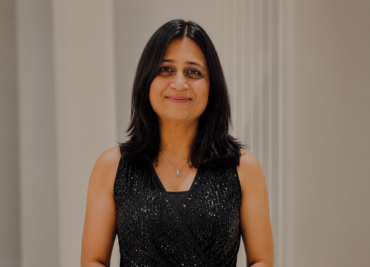
Building strong teams and stronger communities: Dhara’s career at AtkinsRéalis
Today, I’m the Manager, Municipal Infrastructure, Ontario at AtkinsRéalis, where I lead a multidisciplinary team of more than 40 professionals while overseeing the delivery of complex municipal infrastructure projects. It’s a role that allows me to combine my passion for project delivery with my commitment to supporting and developing people.

Vanessa on growth, leadership, and meaningful impact
Meet Vanessa and read how she transformed hands-on field experience into impactful leadership and team success.
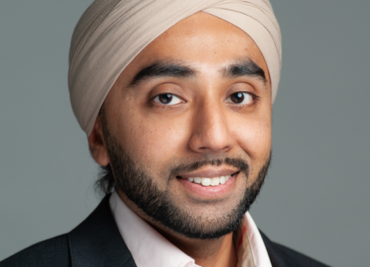
Powering major infrastructure: Paul on leading electrical engineering in British Columbia
I’m the Manager of Electrical Engineering for British Columbia at AtkinsRéalis, where I lead our Vancouver electrical team and support the delivery of complex infrastructure projects.
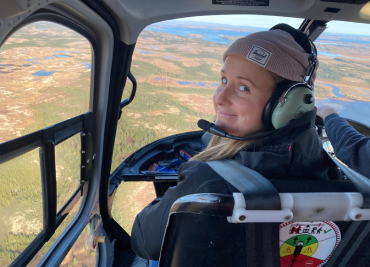
Leading geotechnical work with purpose in Québec city
Meet Marielle and read how she built a career that brings together engineering expertise and leadership.
Related jobs

Everyone belongs
We empower each individual to shine and contribute to our collective impact. We believe in the power of unique perspectives. It’s how we’re engineering a better future every single day.